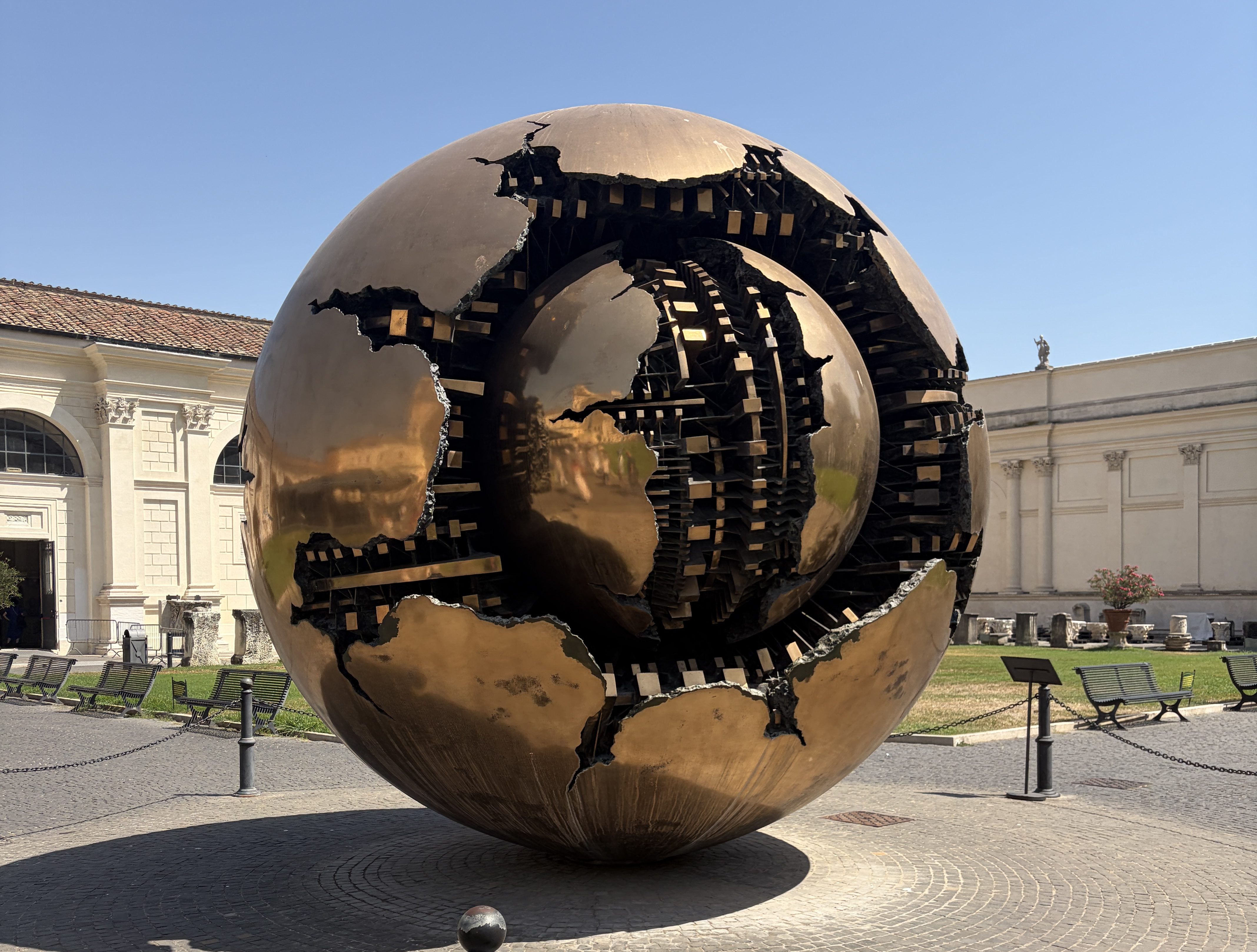
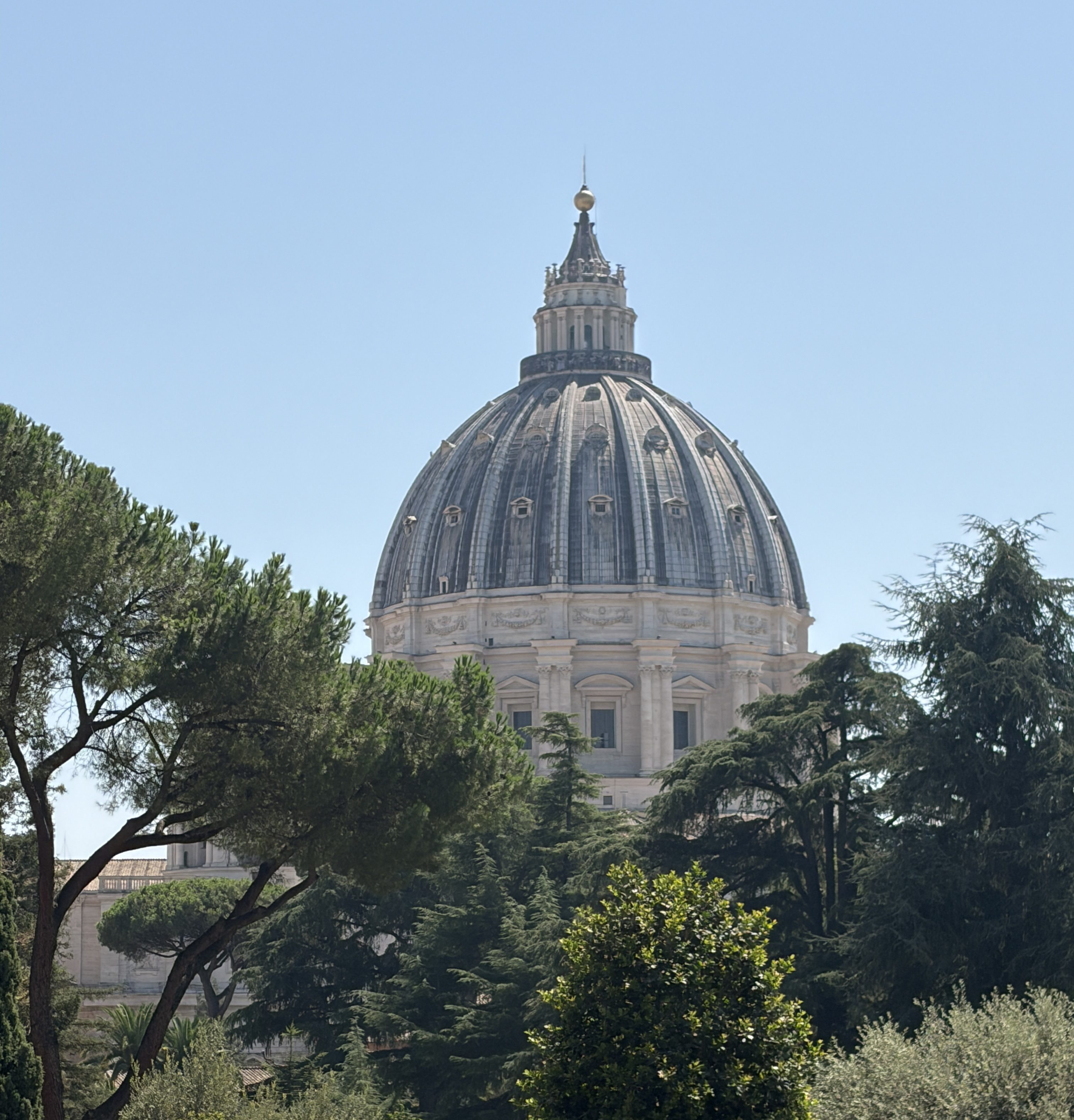
• This is my third time in Italy and the former two times I always left Italy with the strange feeling that this country owes me something. It was always a good visit, but there was always something missing from the equation that left me yearning for an undefined satisfaction…that is until I hit the coast. If I were to really simplify Italian cities that I have travelled in the past, to be about 1 thing only: Rome is about the Colosseum, Vatican is about St. Peter’s, Milan is about Fashion, Venice is about Canals, Florence is about Art, Pompeii is about Roman Ruins, Naples is about Food….then the Amalfi Coast is finally the place where I have discovered the sweet life.
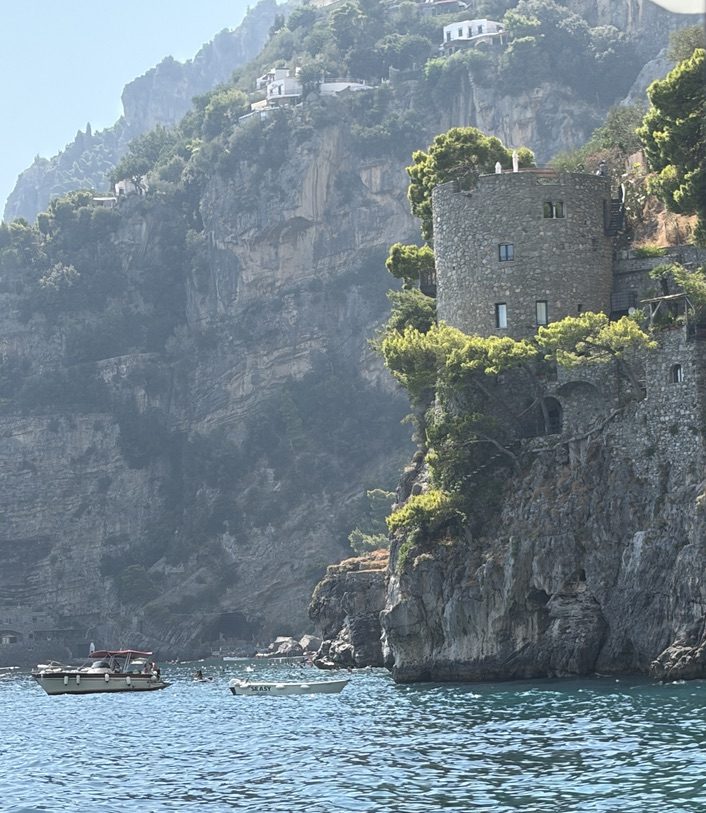
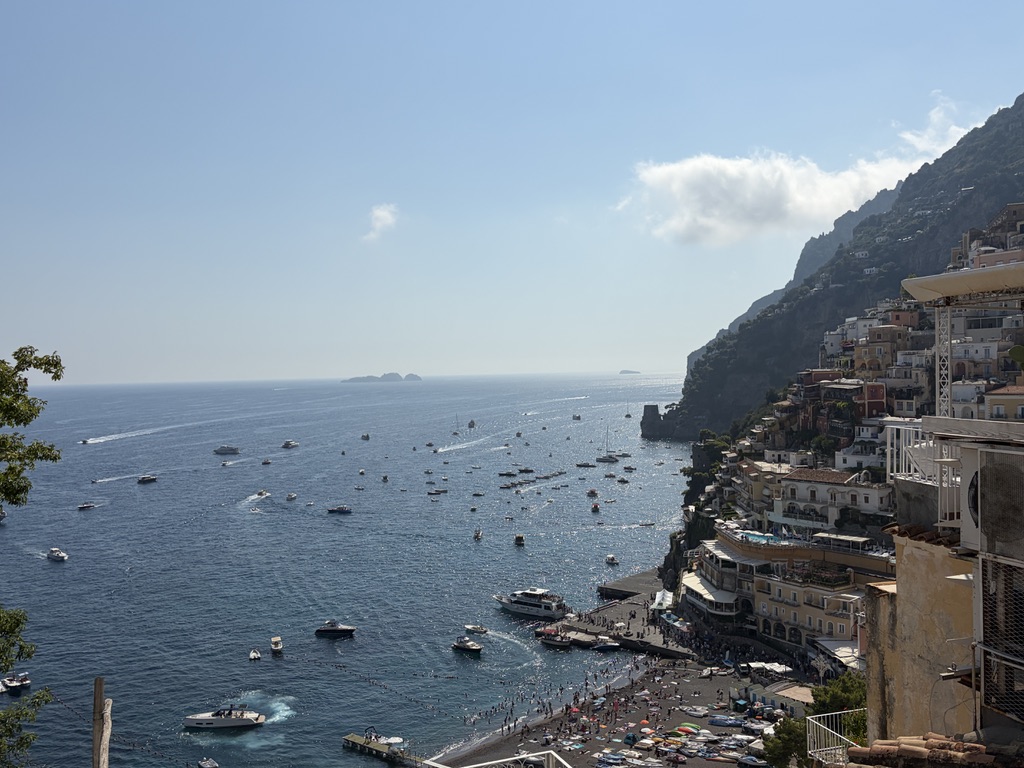
    A magical place that is so breathtakingly beautiful and effortlessly charming that it the sweetest nectar for your eyes, you just can’t drink it in enough. The trinity of architecture, cliffs, and sea enhanced one another and somehow made the place that my poor excuses for knees didn’t mind that we were constantly travelling up hill. We did the Amalfi coast via a day boat trip from Naples and that is likely where we went wrong. Staying in town of Amalfi would have been excellent, but alas at least we saw it and Positano. If we ever come back to Italy, I know where I am headed (with a swimsuit this time).

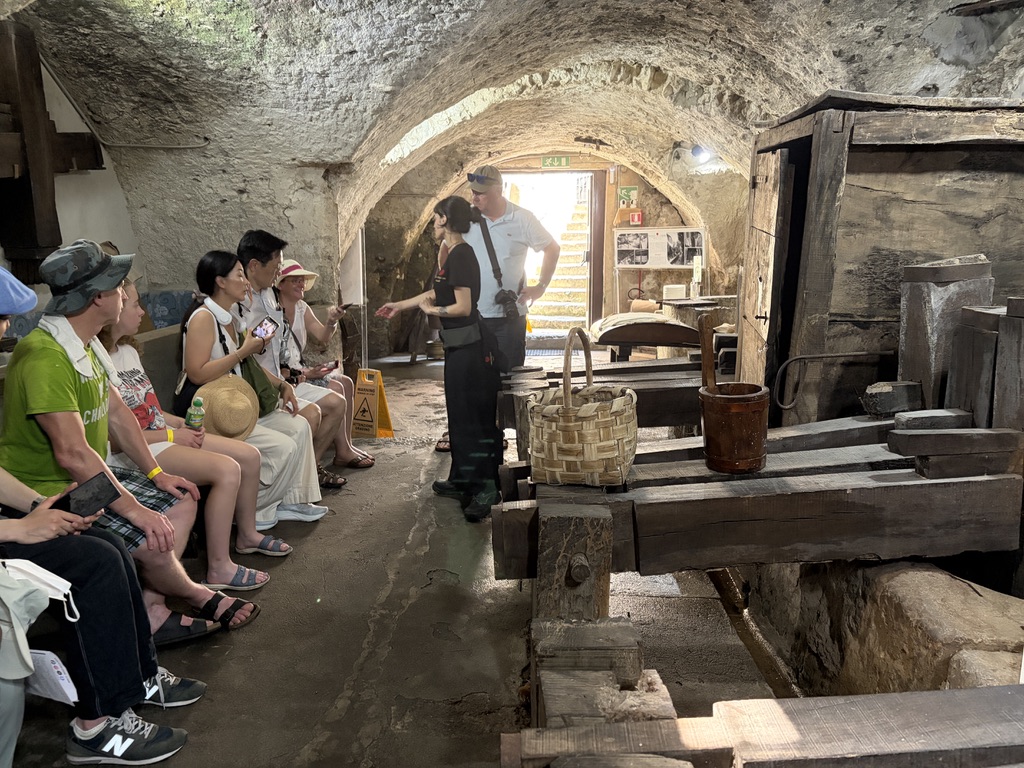
    In Amalfi we visited the Paper museum as this region was known for paper production. They would take old cotton clothes, mulch them up with a series of large (bigger than a man), old (13th century), mallets (wood with spikes on them), into a slurry fed by the river (which runs under the main road). The entire thing was hydro-powered which works really well when you are on such a steep slope. The paper is then placed onto a screen, peeled off, dried, and covered with a coating to make sure ink doesn’t seep into the cotton. It is still used by the Vatican today as it is better quality than traditional paper from trees.
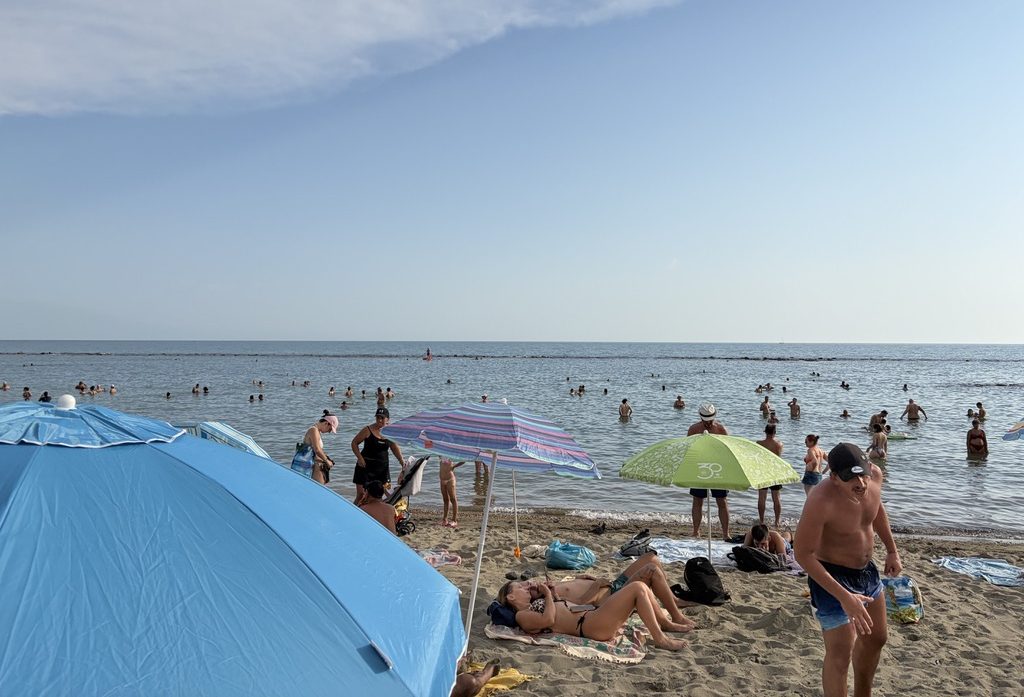
    We ended off our trip to Italy by heading to the beach town adjacent to the airport. After Amalfi we were super keen to get back to the Ocean and the town of Ostia did not disappoint. Mike, Laura, and I spent over 3 hrs frolicking in the water before hitting up the pedestrian only central district that featured a night market, eating on patios, a carnival, and a DJ. It was the perfect ending to the Italian leg of the trip.
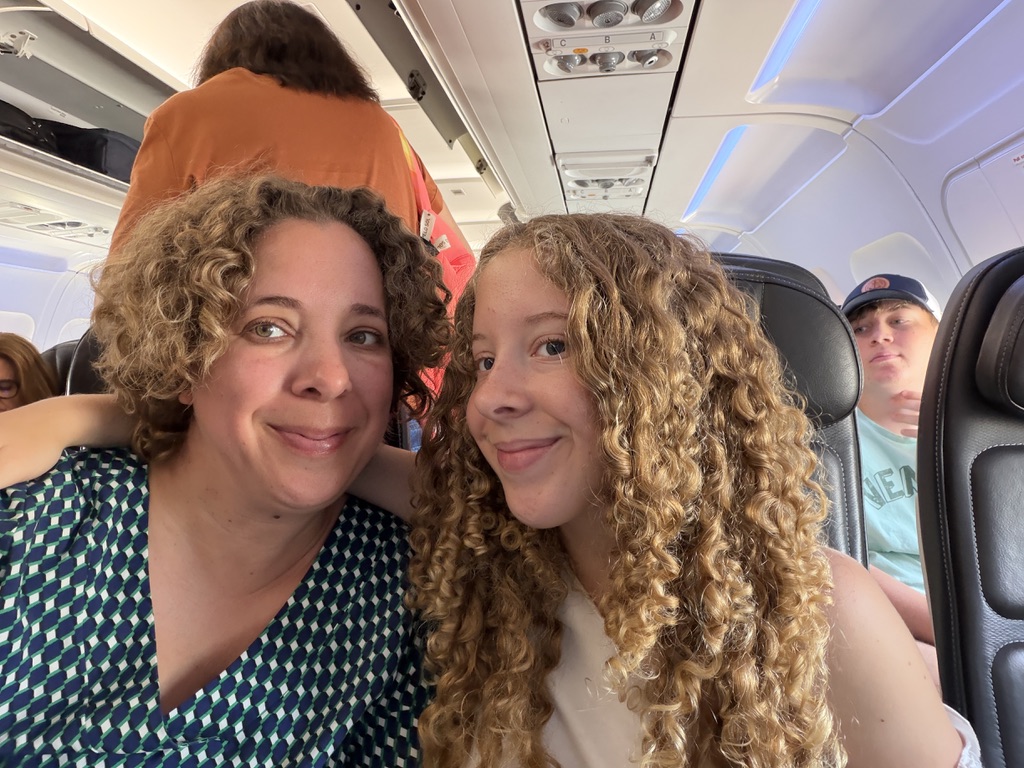
    Goodbye Italia, London is Calling.
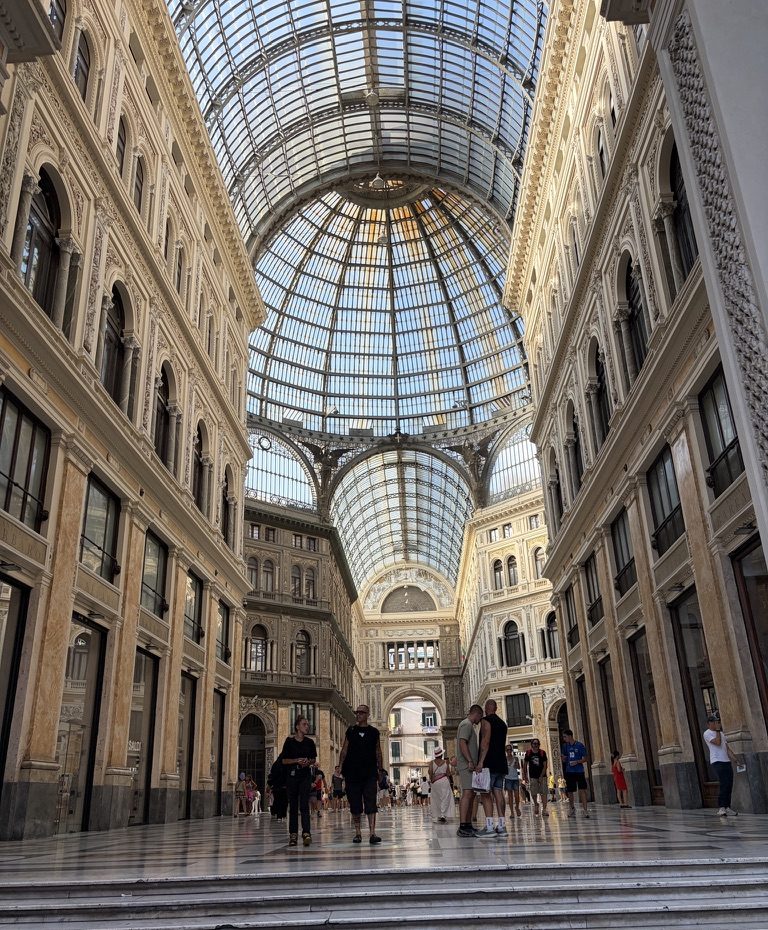
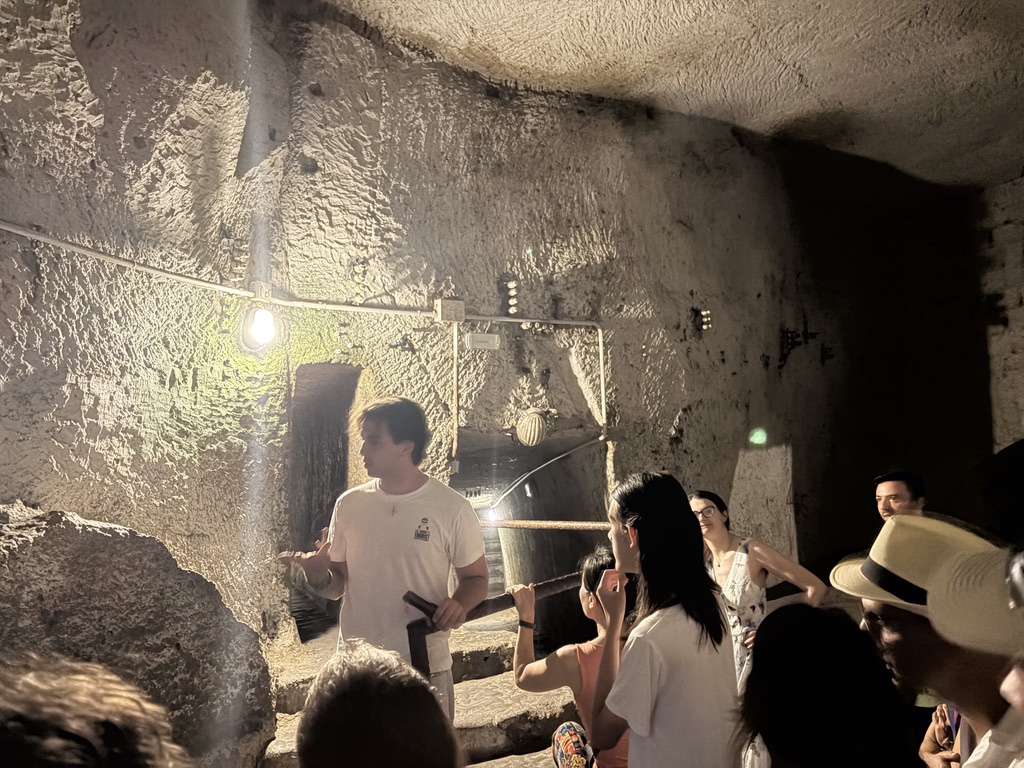
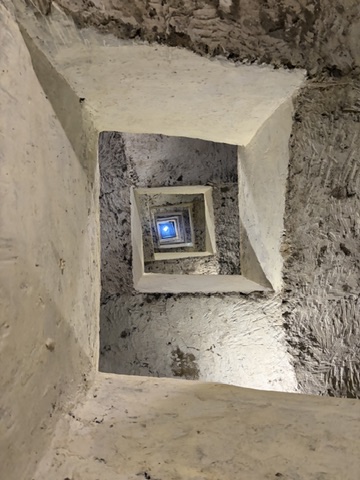
  • So Naples is one of the Italian cities I haven’t travelled to before and it is kind of an odd place, but with interesting historical reasons for the oddities. The first thing is that this city was built as more of a strategic fortification back in the Roman era, and as such it is a city on the Mediterranean, but has no fresh water. The closest river is about 16km’s away, but wrangling water over far distances was never something that the Romans were afraid to tackle. So rather interestingly the city was engineered over an elaborate system of underground cisterns where each home had an indoor well that connected to the cistern system below ground. There is a whole backstory about the well man who serviced the cisterns (called the little monk) that used to occasionally pop into people’s home, and you know, casually impregnate some wives from time to time when the husbands were out…you can get little monk statuettes that bring luck to your home, but I digress. Anyway, with the cistern system, a cholera outbreak happened and that put an end to using that. That was until the 1940’s when Naples was being bombed in WWII and the government remembered that ‘Hey, remember these empty cisterns, let’s use them to protect our people from the bombing’. So for 6 months or so, tons of people lived underground. The Napoli Subterranean tour was absolutely fascinating and a great way to beat the heat, 40m below the street.

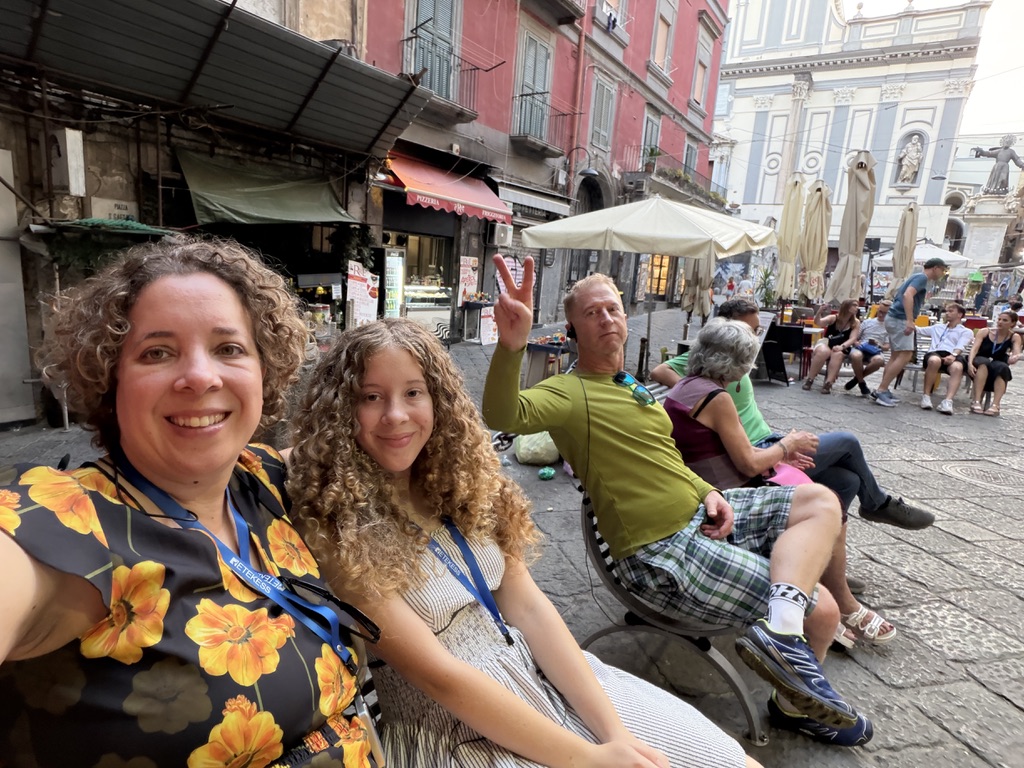
    Naples is also known for being the birthplace of Pizza and on a Street food tour we ate and ate until we were absolutely stuffed. From Margerhita Pizza, Folded up Pizza Wallets, to Deep Fried Pizza we tried it all. However, if you are full, don’t forget there is Limoncello absolutely everywhere, Naples has a borderline unhealthy obsession with lemons. Also hot take here, but I am not a fan of gelato. I have tried and tried to get behind it, but alas my low brow taste buds have limited me to a love of Dairy Queen (which probably isn’t even dairy).

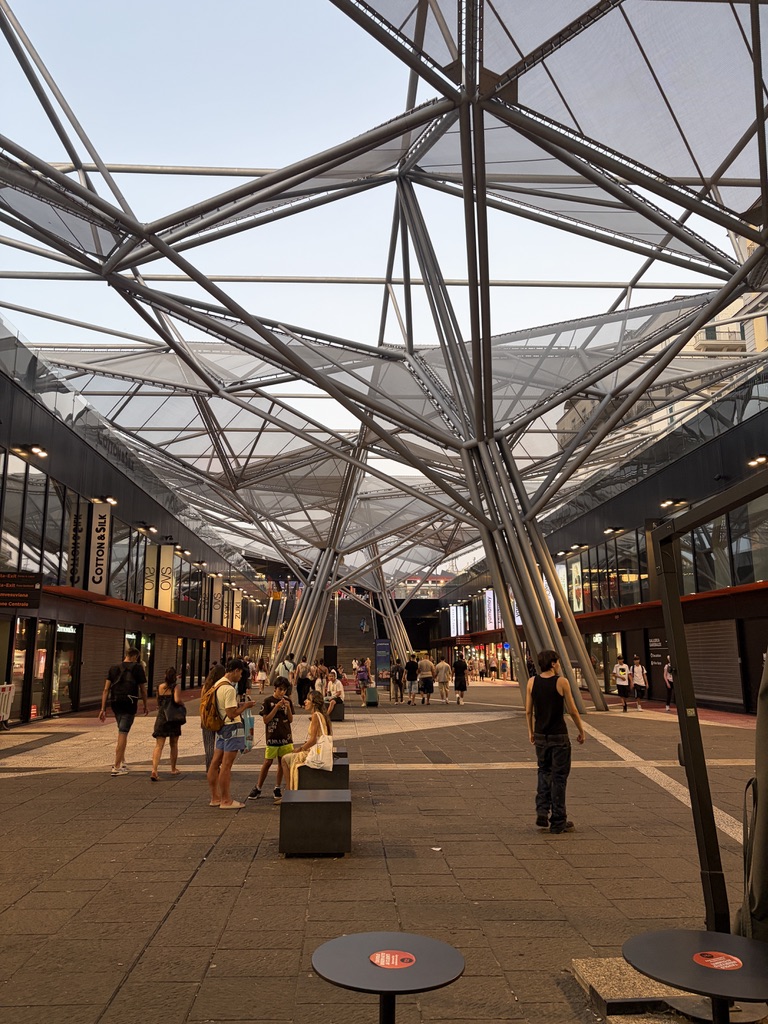
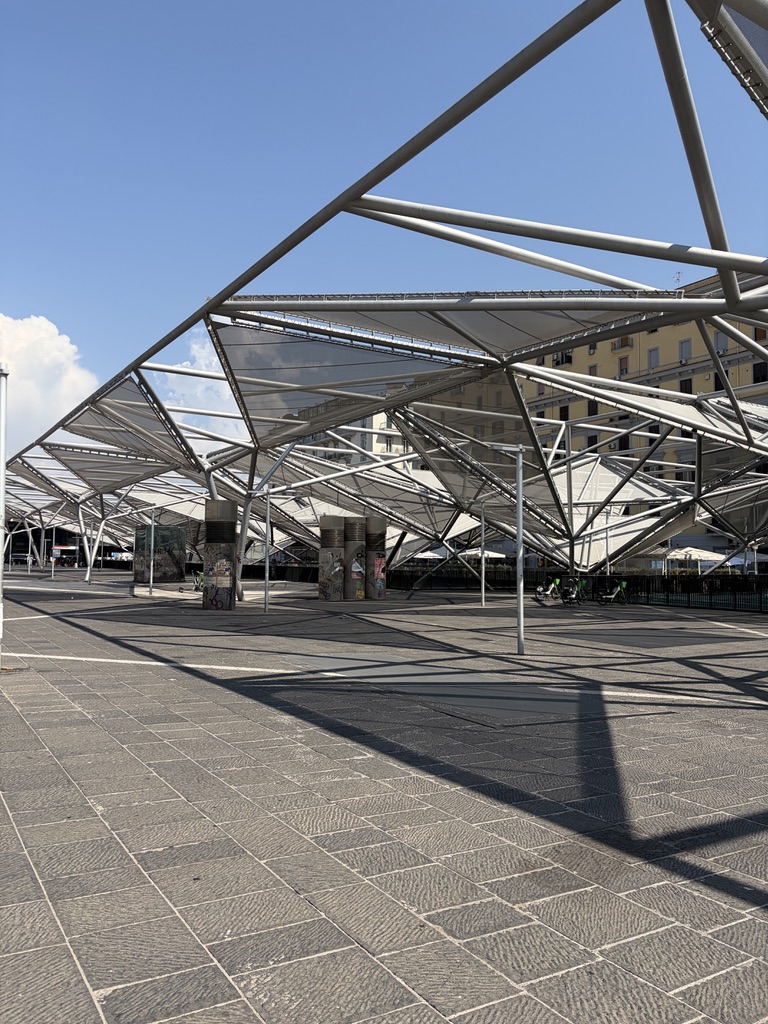
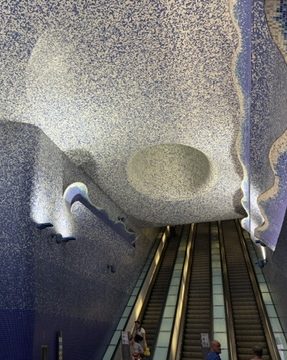
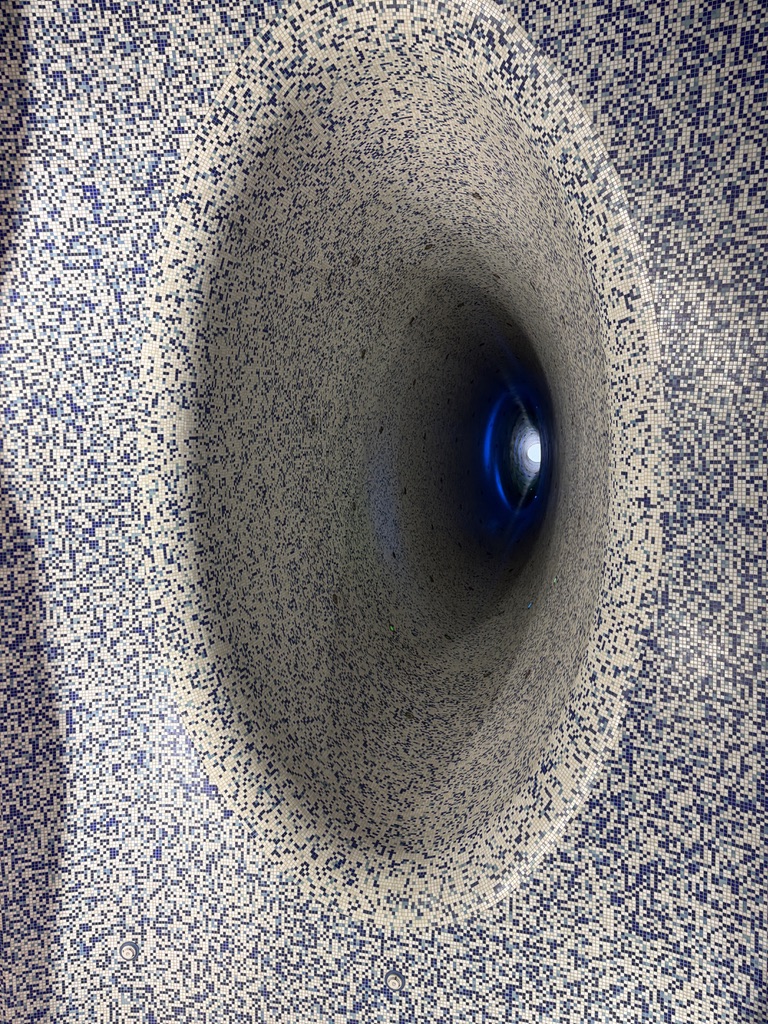
    My last great thing to say about Naples is that in the ‘Old Country’ I am finding bits of the new, which is architecturally interesting. Some of the art subway stations in Naples are pretty amazing from the main train Station (Garabaldi) sun shading devices that pierce through the lower and upper levels of the plaza, and the seafaring mosiac tile in the Toledo Station done by the Catalan architect Óscar Tusquets Blanca.
    With us now at a week into this trip, the day to day reality of travel is becoming easier and more normal…basically we haven’t all killed each other yet 🙂 Upcoming is Pompeii and the Amalfi Coast, will write again soon but ciao for now!

  • Mike and I haven’t toured the Eternal City since our honeymoon, which was 21 years ago, and it was a new experience to be back with our child. As we were quite jetlagged on stop #1 of the world tour, and it was a sweltering +38C, not all exactly went to plan, but it still was a great touring the city at a slower pace. The city is heaving with tourists in high season, and for some reason you can always spot the tourist in the crowd, even a european tourist. Maybe it is because we are all covered in sunscreen, hats, sweat, and have all but melted into the occasional puddles found on the cobblestones from the over 200 drinking fountains found across the city. Here is a city where there is not a plague of disposable plastic water bottles everywhere, thank you Cesar. Moreover, somehow the Romans manage to look effortlessly elegant, as if sculpted by rays of sunlight so as to be unaffected by this blistering heat; we Canadians don’t stand a chance of that.

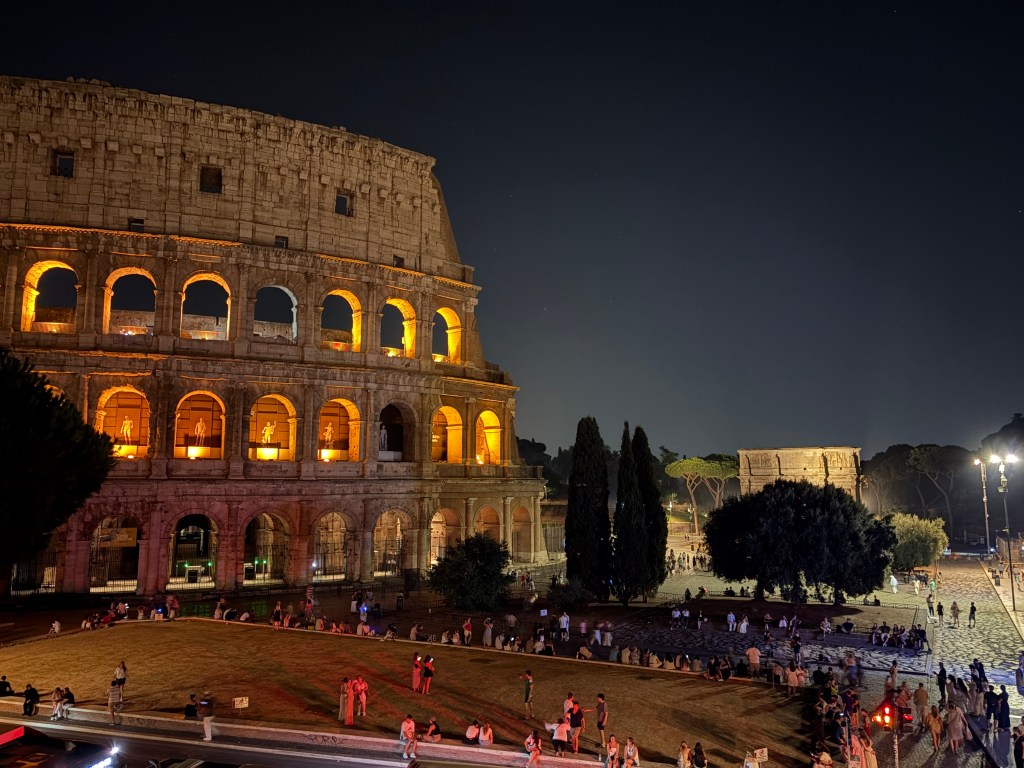
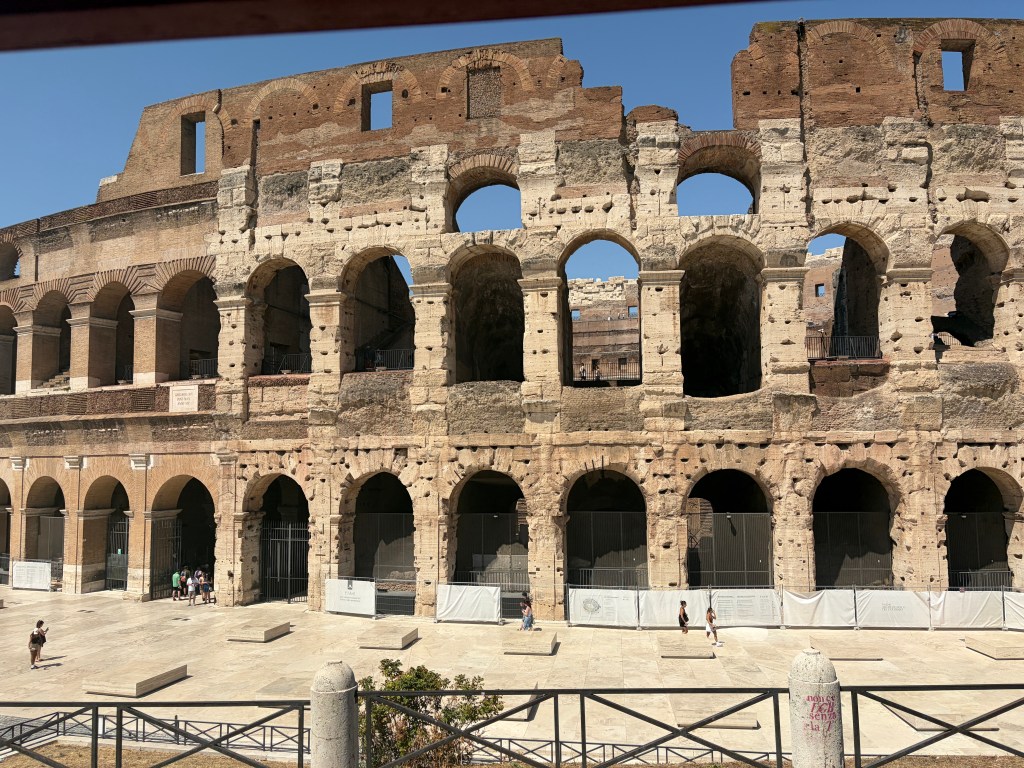
    When in Rome, there are certain things you just have to do. One of them is to pay appropriate homage to the ancients and walking the Colosseum grounds is a mandatory activity. Perhaps in a silly parenting move, Laura and I watched Gladiator (her for the first time) and then we hit up the Hop On Hop Off Bus to go for a tour of the city, but it was when we went back there strolling at night was when I got a better appreciation of the structure without the crowds distracting me. My husband pointed out these square holes in the colonnade walls which I mentioned probably anchored a cladding finish, and yeah it turns out that once upon a time the structure was fully covered with marble, which was pretty interesting to me seeing some ancient techniques.

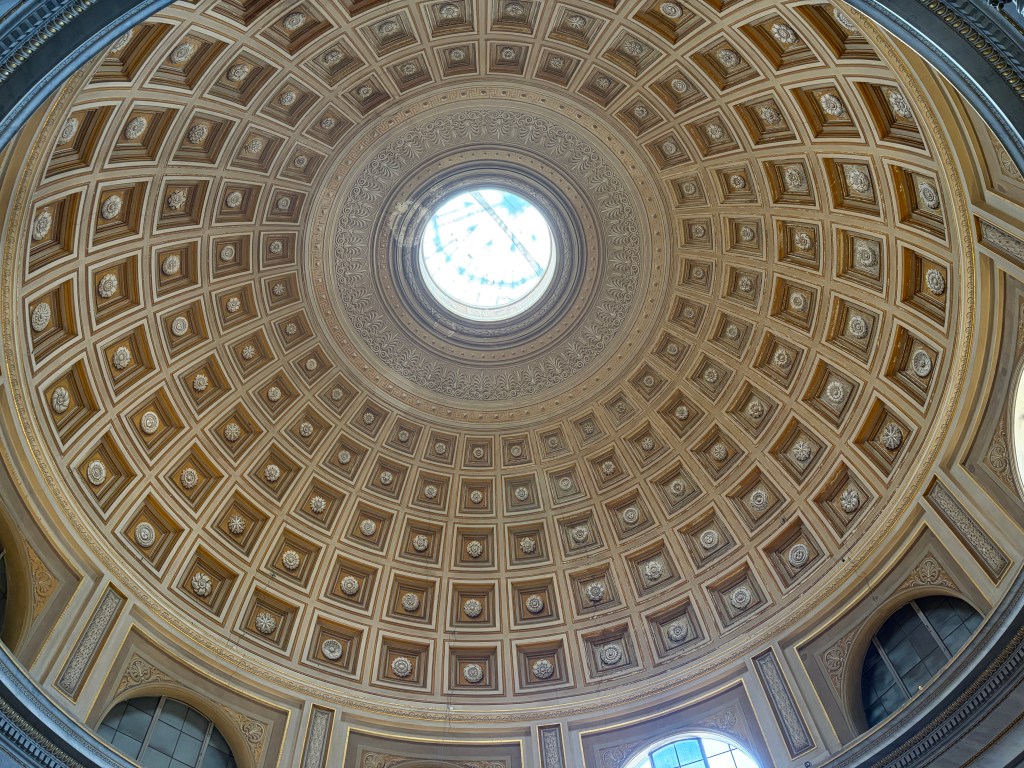
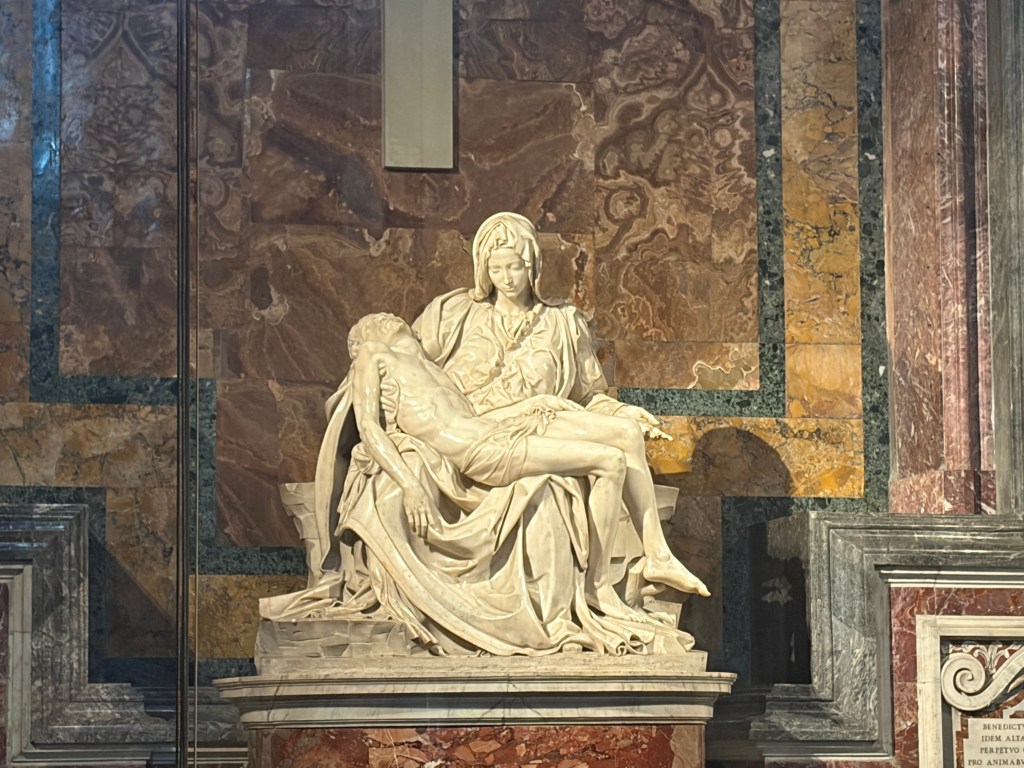
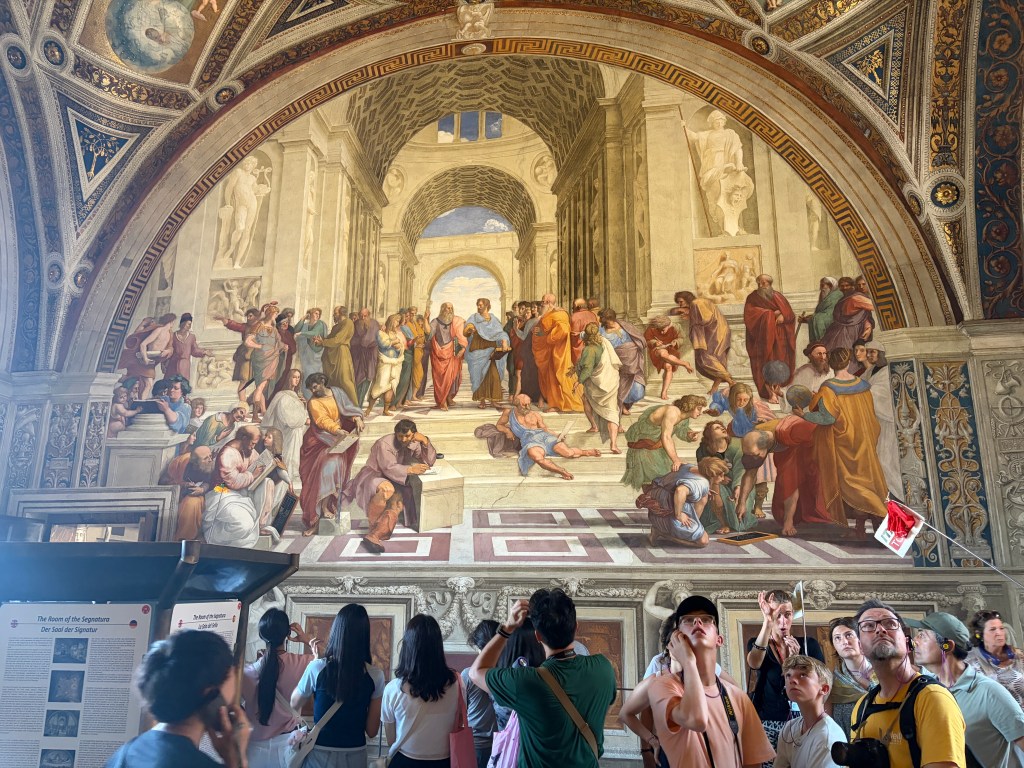
    The second mandatory homage is to the art, sculpture, and architecture of the Renaissance. This is probably no better seen in Rome than at the Vatican Museums where the art styles of the ancient, renissance, and modern art collide in an explosion of coloured canvas and tapestry tempered by the solemnity and piety of white marble. The art historian in me started to nerd out seeing Michaelangelo’s Last Judgement, Pieta, and Sistine ceiling; Bernini’s baroque altar at St Peter’s Church, and Raphael’s School of Athens.

    St. Peter’s Church never disappoints, and although it has been 3 popes since our last time here, aesthetically, very little changes. Thank you Rome for the wonderful adventure, my favourite moment of the trip so far has been when my daughter looked at me with wide eyes saying “Mom, we are like, actually in Italy”. We are headed to Naples today and looking forward to Pompeii, the Amalfi Coast, and all the Pizza we can stand.

  • Well, we are t-minus 9 days to this world trip and, somewhat trivially, I realized that I have nothing to wear. I will be the first to admit that I am not the most stylish person and I don’t particularly relish thinking about what I am going to wear everyday. A bit side benefit for people like me becoming architects is that we get to wear black a lot, and that suits me fine here in Canada. However, as Europe is having an epic heat wave, Africa and parts of the middle east are on the itinerary, before we are off to SE Asia having an all black wardrobe seems like a liability.

    More organized people have capsule wardrobes, which honestly seems daunting and kind of expensive (when we should be saving pennies right now). Knowing that whatever you bring on a world trip is going to get trashed, and that you will have to likely shop abroad at some point with this ‘north american’ body shape makes you want to fall into one of two camps the ‘bring everything approach’ or the ‘bring nothing’. Add to this that it is not going to be summer all the time and that we are going to be travelling through Japan, China, and Korea in the dead of winter.

    The last little challenge is that I don’t want to look like I just stepped off a cruise ship, everywhere I rock up. When we did this world trip 17years ago there was a deep backpacker aesthetic of Ali Baba pants (of the 40 thieves variety…not the retailer), and if you were wearing some sort of Banksy-esque graphic tee, then were you even travelling? Now as a mother, and a professional in my 40’s, I don’t think I can wade into those waters again.

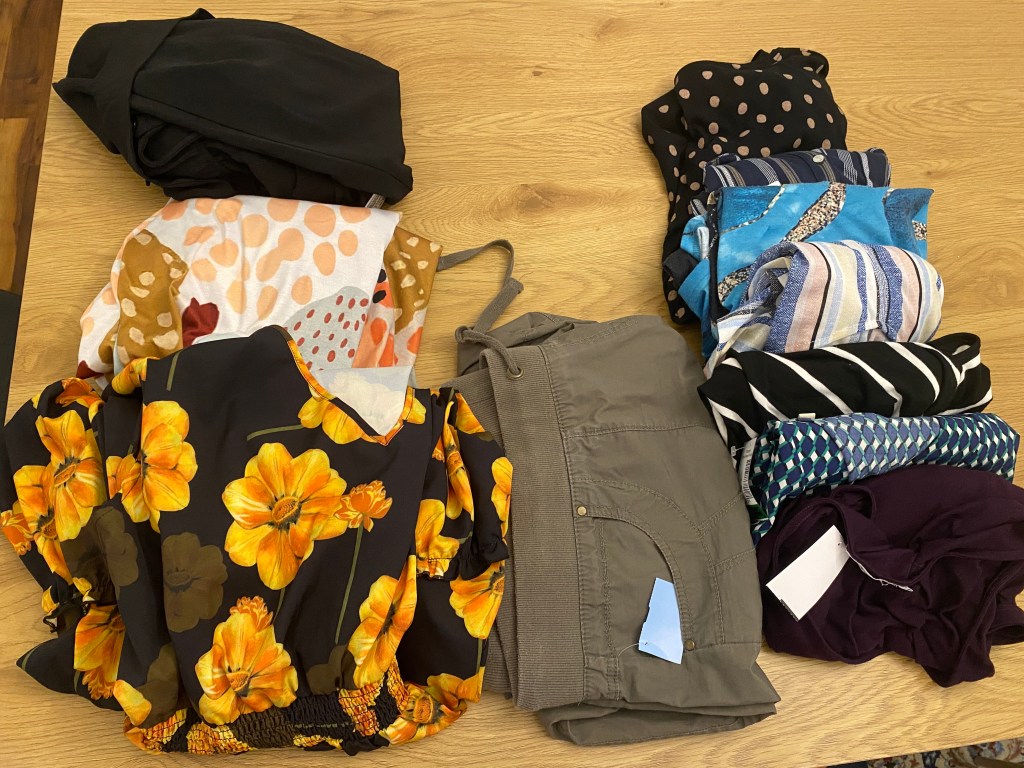
    So keeping all this in mind, I started thrift and consignment shopping yesterday. I personally like thrift and consignment as there are A) great deals, B) items that have already been pre-shrunk, worn in, and have survived an owner already, C) you can instantly tell which fabrics are going to just be wrinkly fiddly pieces, and D) it feels like I am making a sustainable decision as there is so much fast fashion these days hitting landfills. I also did a clothing exchange earlier in the month which was most excellent. In any case, I started in on dresses with pockets, LOVE a good pocket, and spent most of the day with shirts. I figured if I manage to get boring pants/shorts I can liven up my black wardrobe with some much needed splash of colour. I don’t know if these are going to make it to the final line up, but as we are almost at game day here, it is going to have to do.

    Looking at it all together…there is still a lot of black/dark colours. Well apparently you can take an architect out of the office, but not out of her wardrobe preferences, alas. The haul consisted of 2 dresses, one black jumper, 1 pair of short cargo pants, 7 shirts. I think with a pair of jeans, a white tank, a swimsuit, 2 pairs of shorts, 2 sandals and 1 pair of shoes, and some PJs should take me around the globe. If not, apparently there are thrift shops in other countries too 🙂

  • The idea of taking a trip around the world with your family is really exciting and full of adventure, the trouble is once you get started on planning, you realize man there is a lot of prep work. The first question people ask when you tell them you are doing a trip is the itinerary and not many people think about the vaccine requirements, which vary depending on which part of the world you are in, how tolerant are you of side effects, and how much money do you want to spend on ‘the good stuff’.

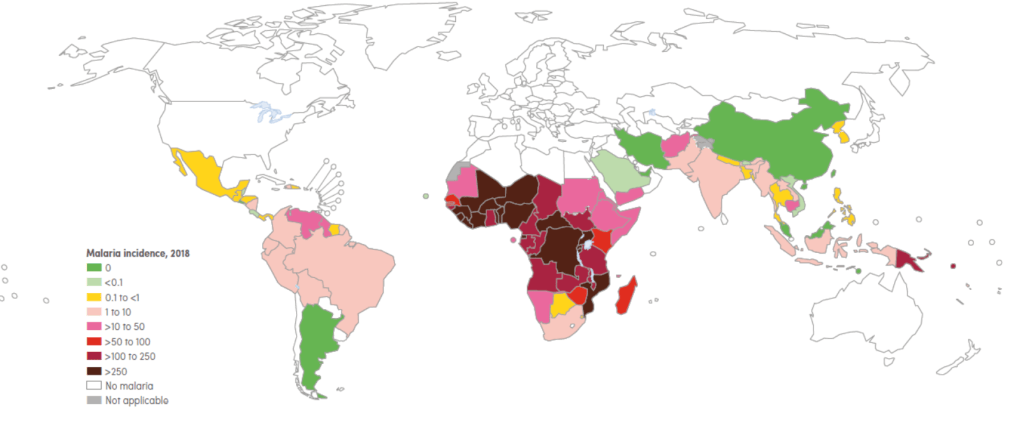
    A good example of this is Malaria, if you are planning in hitting up Africa for a safari (which hasn’t been ruled out yet of the planning) or if you are going to India & SE Asia, you might want some meds. The creme de la creme of the malaria medication is Malarone, you take it 1-2 days before you are in the zone, every day you are there, and a week afterwards. The trouble is that it is kinda pricy, and if you are weaving in and out of malaria areas on a budget, it might not be worth it. Now the on the other end of the perspective there is Doxycycline, the cheapest of the malarial drugs, you take the same steps before and during but it is 4 weeks of pill popping on the back end. Luckily, this drug doesn’t have the side effect of psychotic dreams, which we experienced, when taking Mefloquine years and years ago when we did our first world trip together.

    I got jabbed today so now I am building immunity to Tetanus, Diphtheria, Typhoid, Hep A, in addition to the others that I already had in the bag like MMR, Hep B, Polio, and Yellow Fever. Basically, I am invincible and could get hit by a bus right now and not have a scratch on me. Mosquitos, we are ready for you.

  • Crossing back over the island we made our way over to Fogo Island. I read somewhere, somewhat romantically, that Fogo was an Island off of an Island, somewhere in the North Atlantic and if that doesn’t make you want to go explore, then I don’t know what will. As an architect, I was really interested in going there to explore the work of Todd Saunders. Todd is a Norwegian based Canadian architect born in Gander, NL (which I stopped by briefly to check out the history of aviation on this trip). I had met Todd at an architecture talk in Banff the month prior as he was giving a talk about his own origin story in architecture and the evolution and craft involved in his work.

    Fogo Island is a unique community that was once upon a time based on fishing, but since the halt of the fisheries in NL, reinvented itself to become a luxury travel destination with the Fogo Island Inn, and an arts and crafts hub with design of several artist studios dotted across the island. All of these projects were co-designed with the Saunders studio, and all have a strong connection to the existing typical Newfoundland house vernacular style, reinterpreted into modern commerical structures. So, architecturally speaking, it is a really interesting place to explore what I want to call ‘The New Rock Modern ‘, or however we want to talk about the architectural style being birthed out of this island.

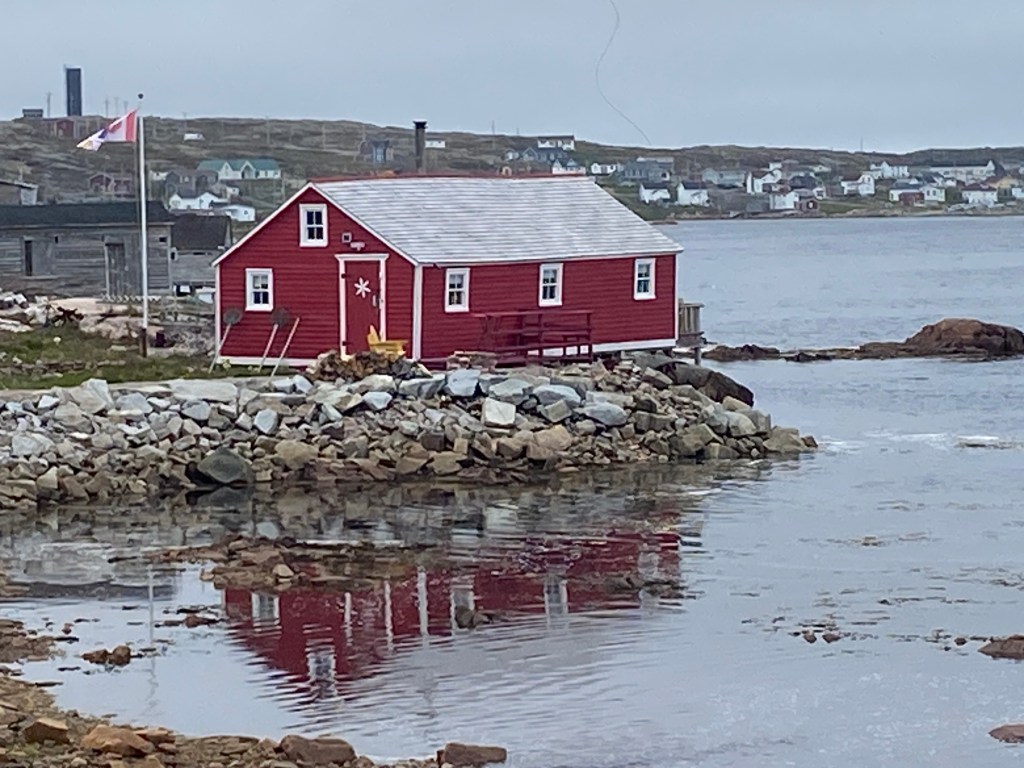
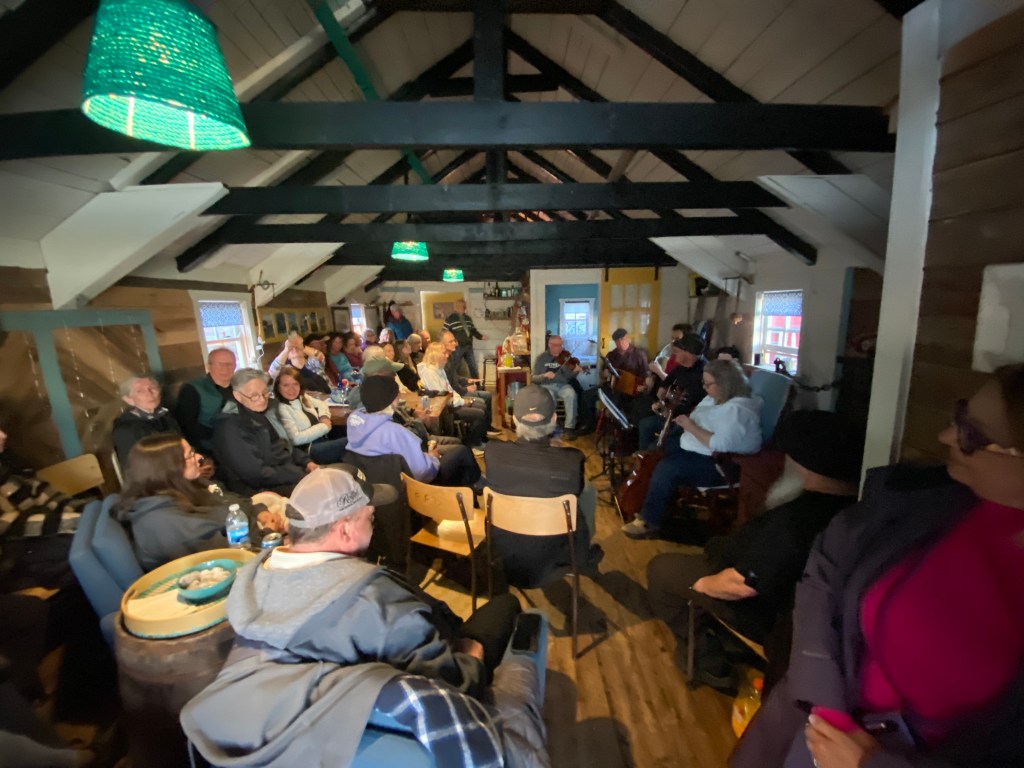
    Traditionally speaking, Newfoundland has a lot of brightly painted wood buildings, quaint fishing villages, and most buildings are smaller in scale. The reasons for this kind of represent Newfoundlanders as a people. They have colourful/artistic spirits, they are deeply practical, resourceful with what they on hand, and have a strong ‘I can build this myself’ type of work ethic that you really have to admire. Building are painted wood because if they were vinyl siding it would be ripped off by the wind (which I also saw several times). The image below is a fishing work shed that was repurposed into a kitchen party music hall, where we crammed 40-50 of us to listen to artists play traditional music at a Kitchen Party. It would have been originally resting on piles over the water.

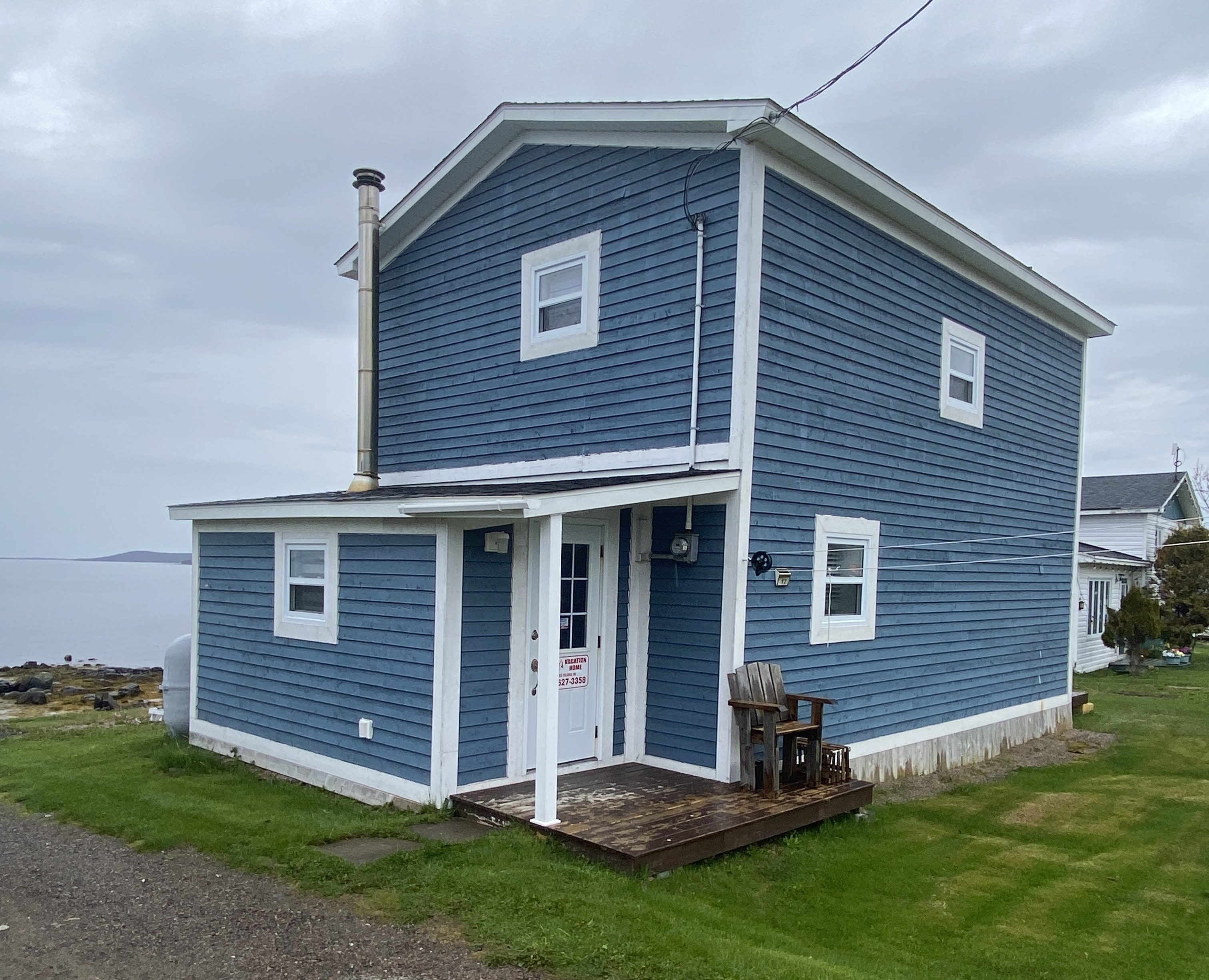
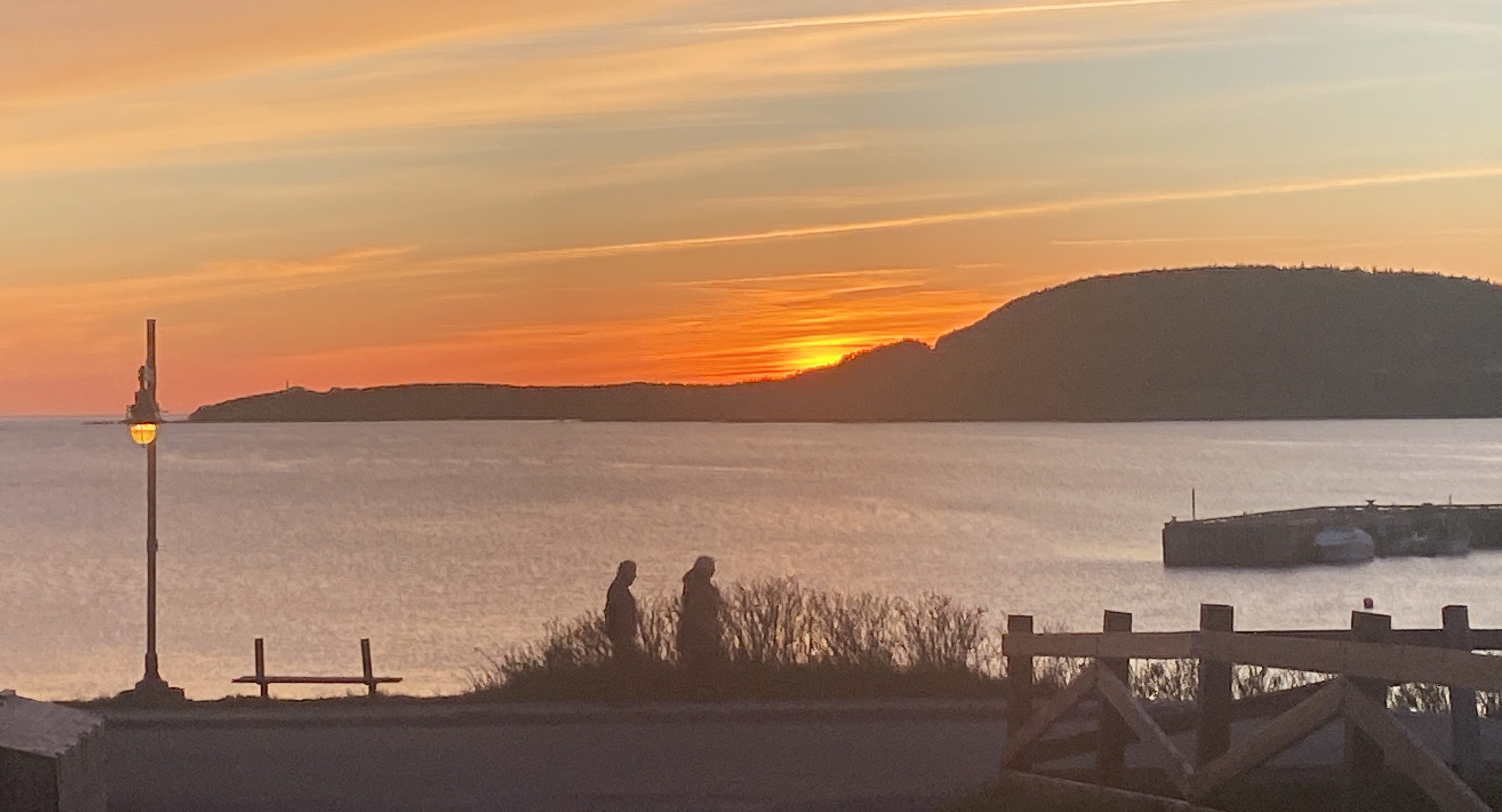
    The house I was staying in was an 100yr old Saltbox house about 15mins from the ferry, right on the ocean. It was absolutely gorgeous and we had the nicest of hosts, I can’t gush about them enough. This house is a traditional typical type of housing typology in Newfoundland, representing the most efficient use of space and how a lot of Newfoundlanders in the 20th century grew up.

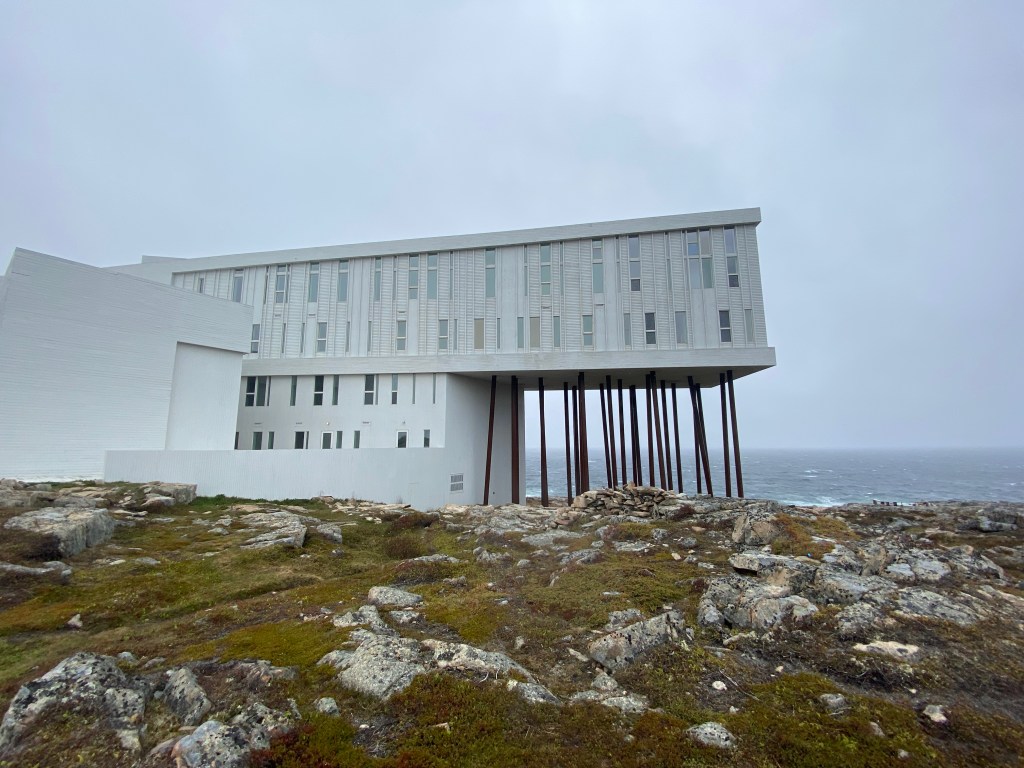
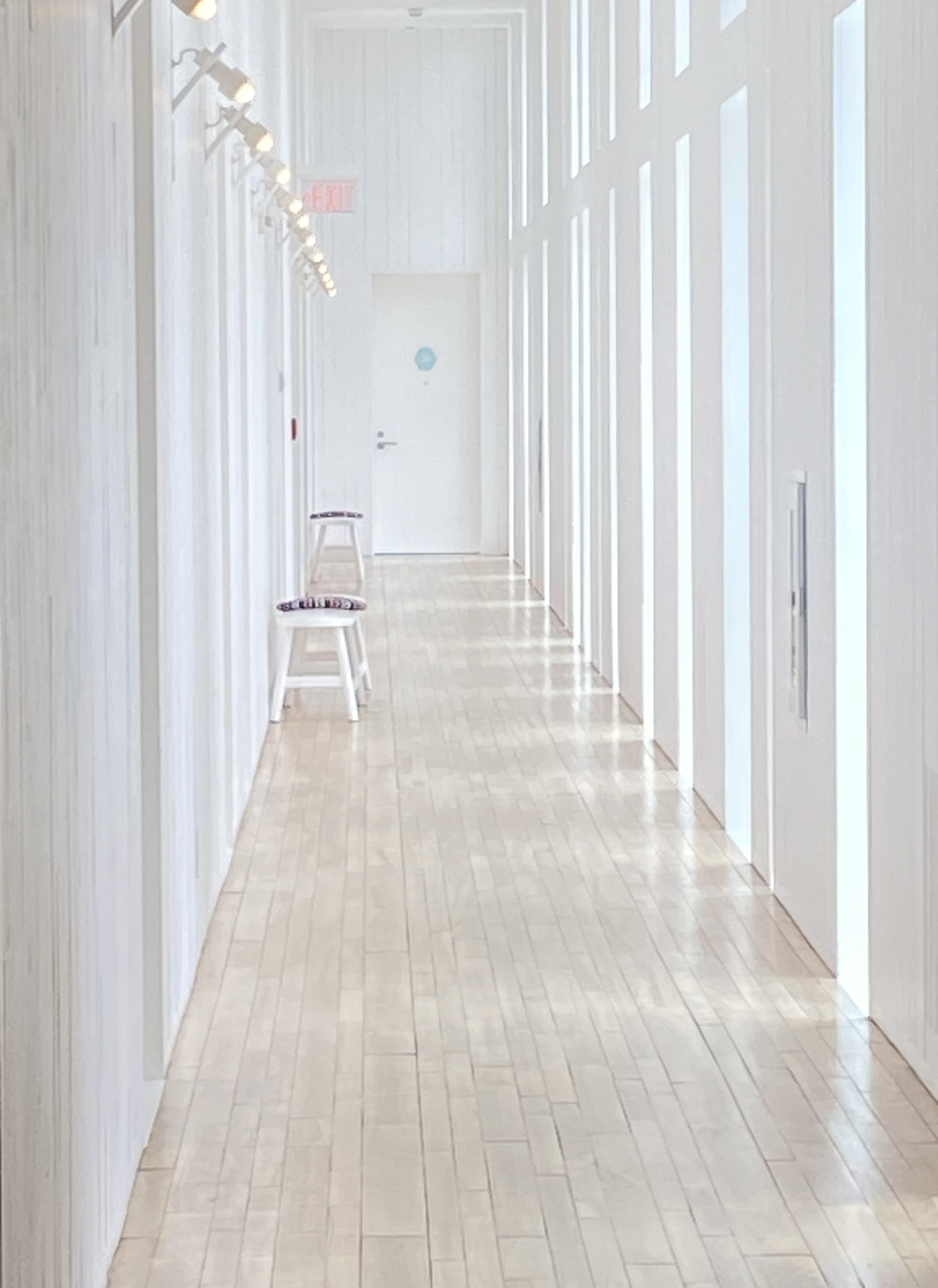
    The work of Todd Saunders is based on a lot of these earlier designs, however it is reinterpreted. Take the Fogo Island Inn, the building features wood ceilings, walls, and feature wall paper. These materials are very typical to the the traditional salt box house, moreover the walls and ceilings in the Inn are done showing the cracks between boards to evoke the connection to these 100 year old houses. The Inn is also situated on these steel piles that float the building above the land, very similar to the how the fishing sheds were floated over the water traditionally. These are all, presummambly, connections to Saunder’s youth growing up near here in the 1970’s.

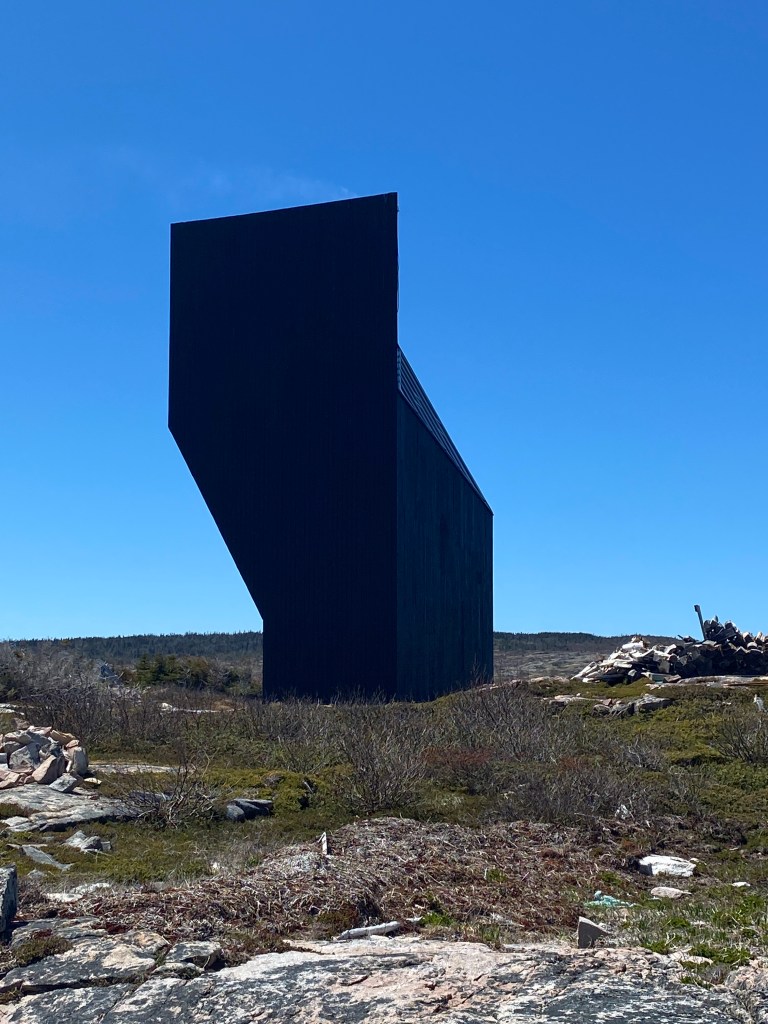
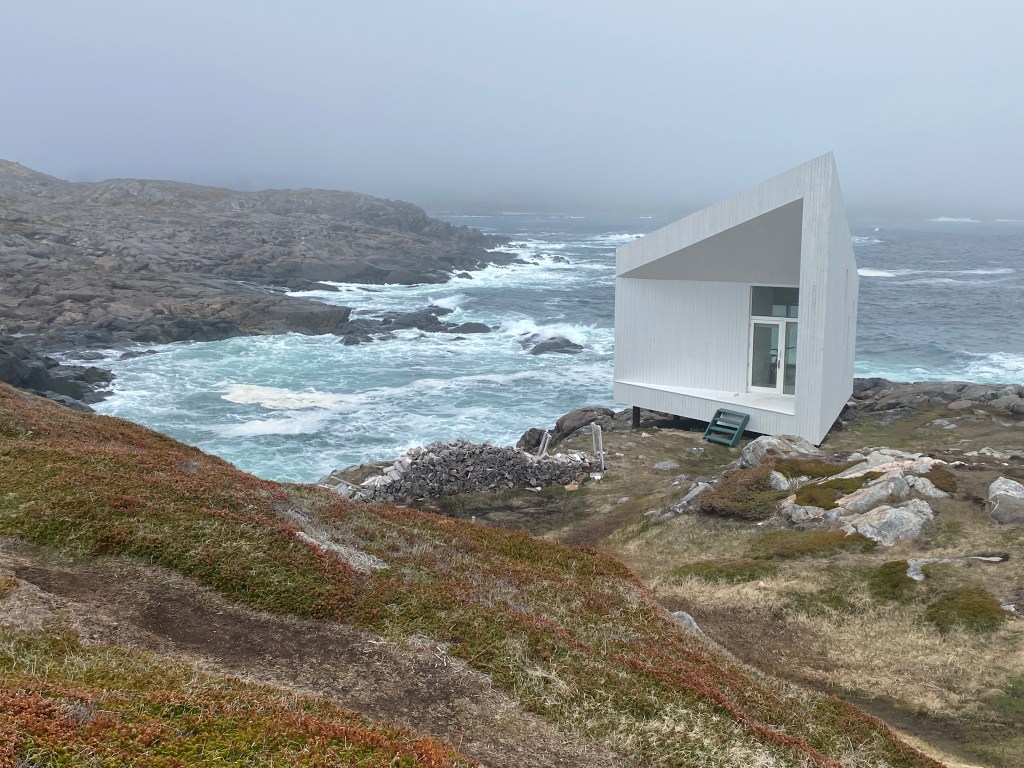
    The restrained colour palette is something that we see in all of the projects on the Island, with the architect preferring to show colour in the handcrafted furnishings or quilts in the building. The colour is also reflective of house Newfoundland really looks the 9 months of the year it is not summer, in that it is quite remote and home to a temperamental sea washing rocky shores. The Tower studio and squish studio is another implementation of this austere aesthetic giving preference to simplified form over colour to create remote pieces of beauty. When I saw them, I was immediately reminded of icebergs floating over the landscape.
    This is going to be it for the Newfoundland Trip 2026. My family and I are busily preparing for the World trip starting in August 2026, and the planning for traveling 8 months and teaching our 14year old abroad is going to be a lot of organize. But I will post more with how the planning is coming when we are on more solid ground. So until then, as the Newfoundlanders might say: Take care, me ducky.

  • We travelled all the way to the northern tip of the island in search of icebergs and vikings to be greeted with a lovely June snow, sleet, and rain, all within one day. However, because the weather was poor, you felt a strange sort of kinship to the vikings who were explorers here 1000 years ago. This prairie girl got a eerie sense of being a stranger in a strange land in the wilds surrounded by the Canadian shield, icebergs, and the sounds of fiddle playing from the nearest kitchen party.

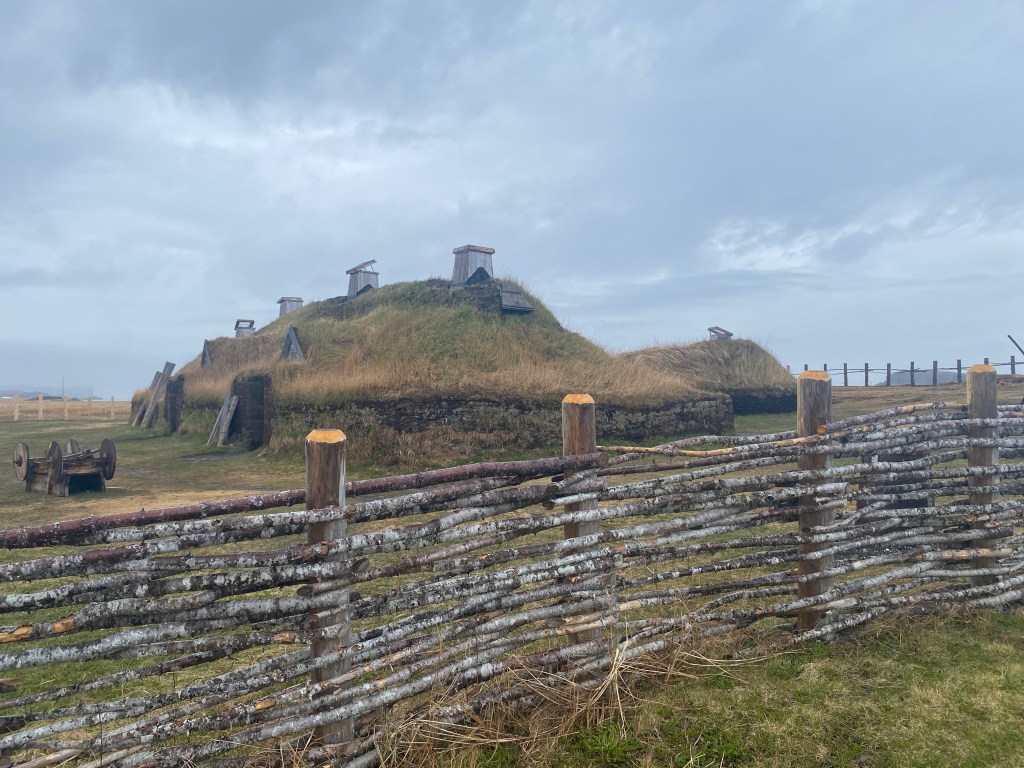
    Our time with the Vikings was spent at L’anse aux Meadows which is a UNESCO world heritage site marking where the Vikings first touched down in North America. They actually reached the shores by accident with a boat that was blown off course near the coast of Greenland and ended up here 9 days later. After he found his way back to the colony in Greenland he told tales of land that had trees that was only 9 days away. Trees were hot ticket items and really in short supply in Greenland, they needed wood for their boats and for fuel. We were talking to an PhD candidate in archeology at the site and it turns out there is new evidence at the dig sites that the Vikings were likely inhabiting L’anse aux Meadows for likely hundreds of years longer than initally thought, so there may be some changes in the near future in our knowledge about Norse colonies and what they were used for/how long they persisted.

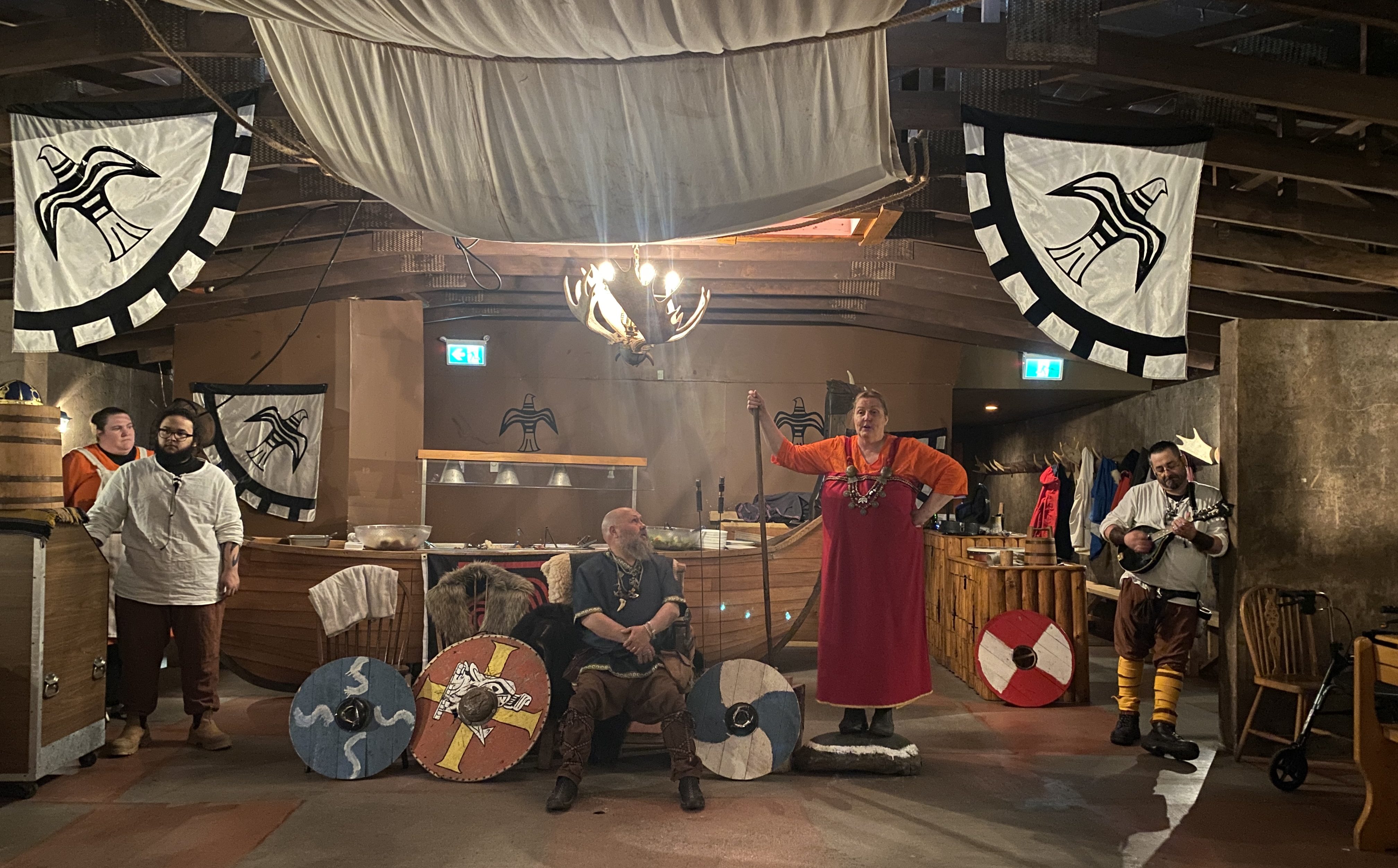
    For a bit of fun we ended up at a Viking dinner theatre, which was actually a riot. My daughter hauled me up in front of the Viking court ( aka an ‘Allthing’) and accused me of busting in on her when she is on her computer. Personally I think I am just being a good parent and that argument won the court. My kiddo was brought up on false charges was sentenced to doing the dishes for 3 nights in a row. That seemed like justice to me. She, on the other hand, was not pleased.

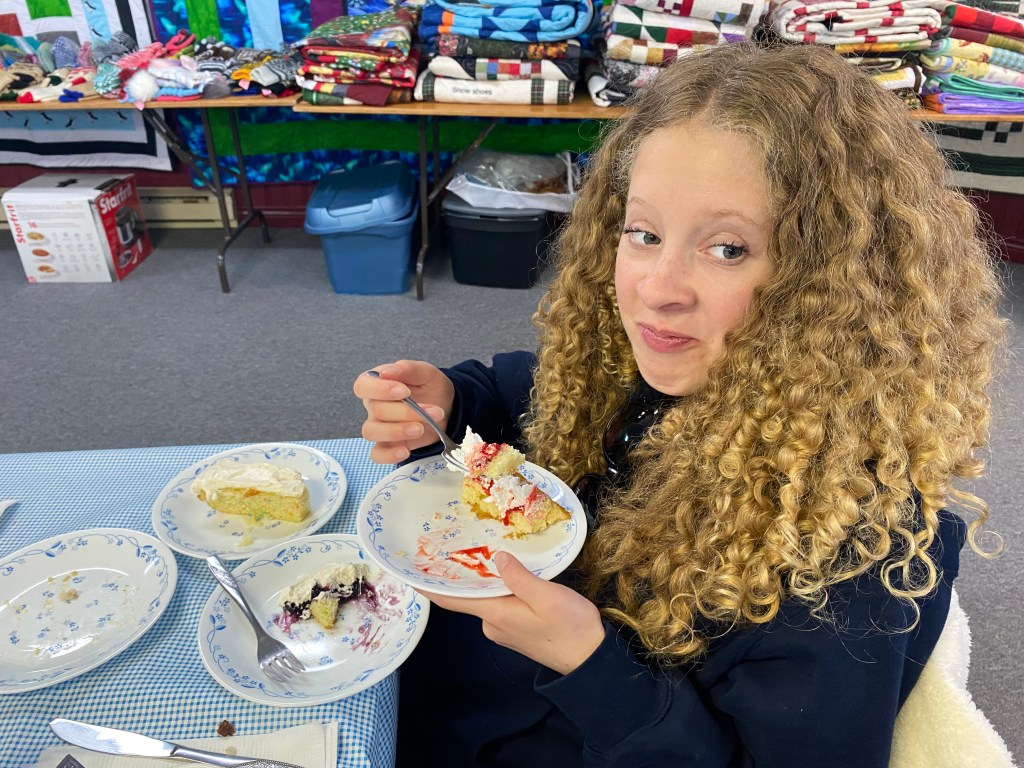
    One of our favourite places to eat in the St. Anthony area was in the Central United Church community basement, which is where Laura is chowing down on dessert. In addition to crafts, jams, quilts, and clothes for sale there is also lunch (aka nfld ‘dinner’) prepared by the fair hands of the church ladies. Over 3 days we ate meals like soup & sandwiches, fish and brewis, fish cakes, and chicken dinner, all meals were $10 and included coffee/tea and dessert. Home cooking was never so delicious or affordable.

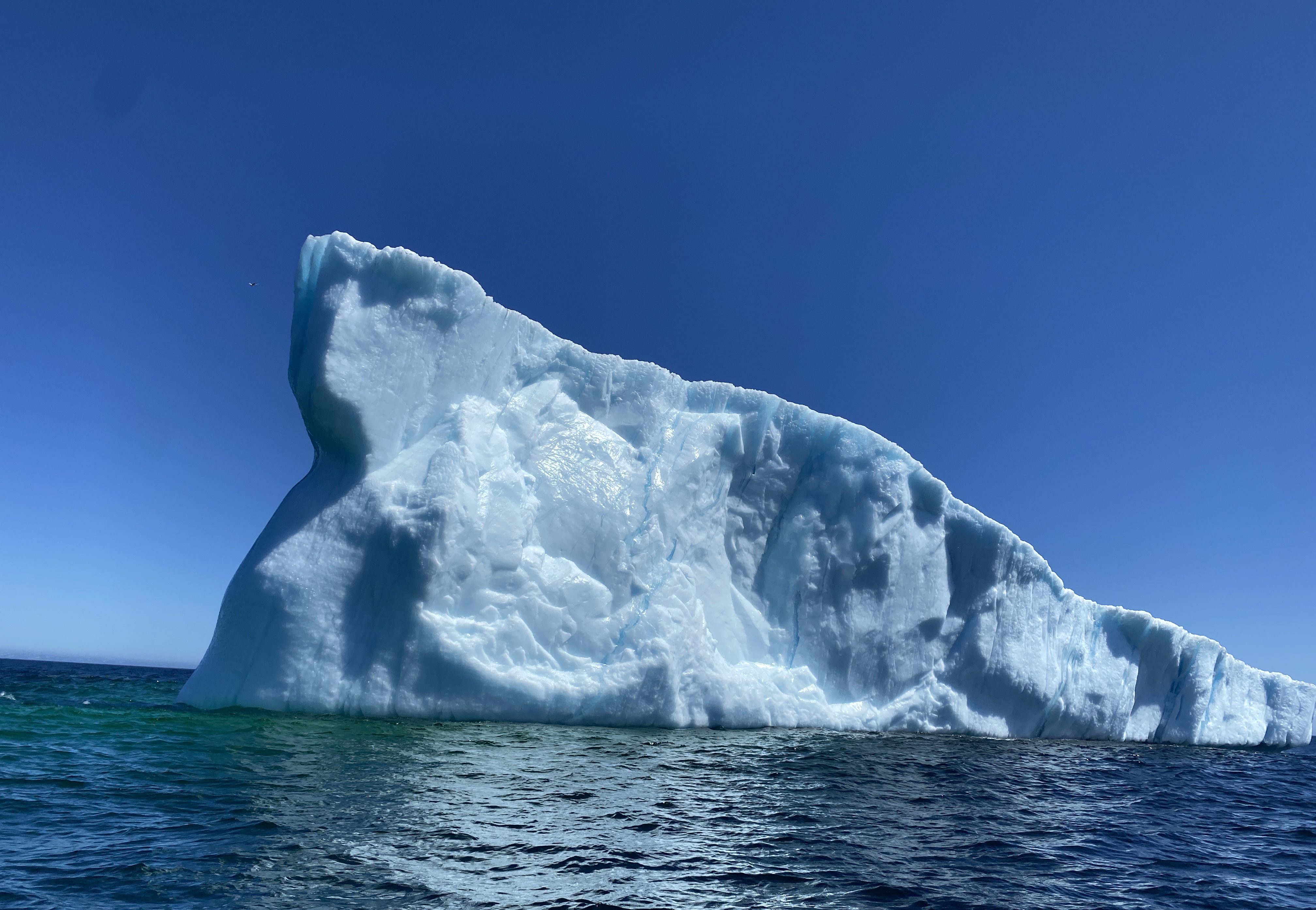
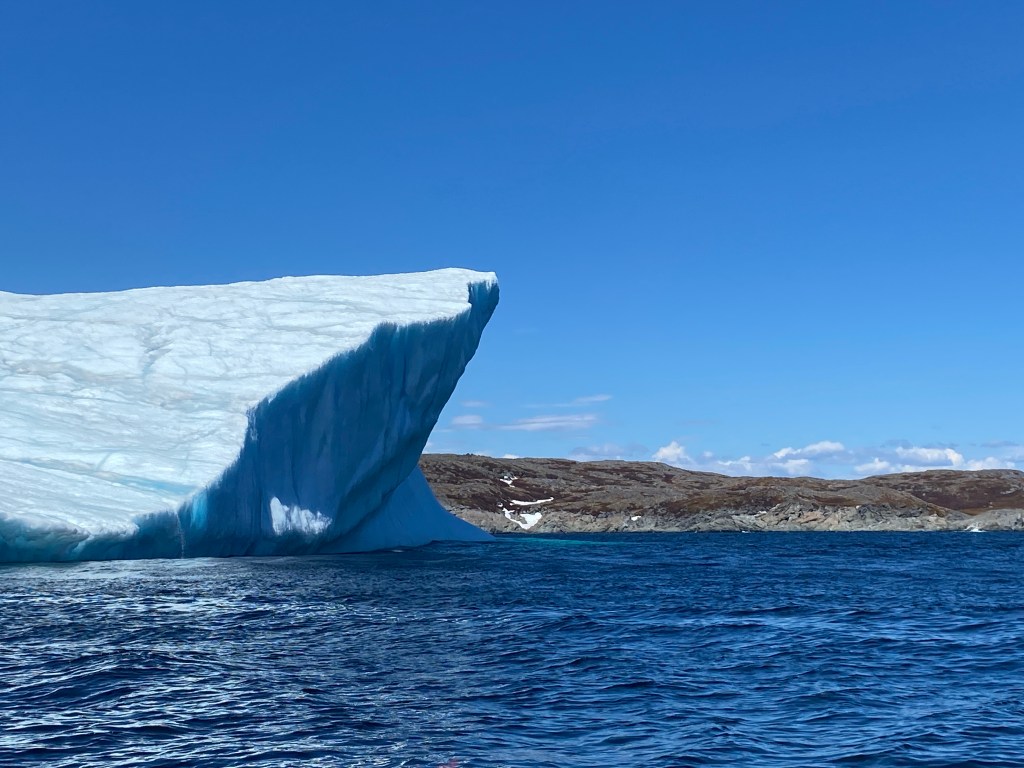
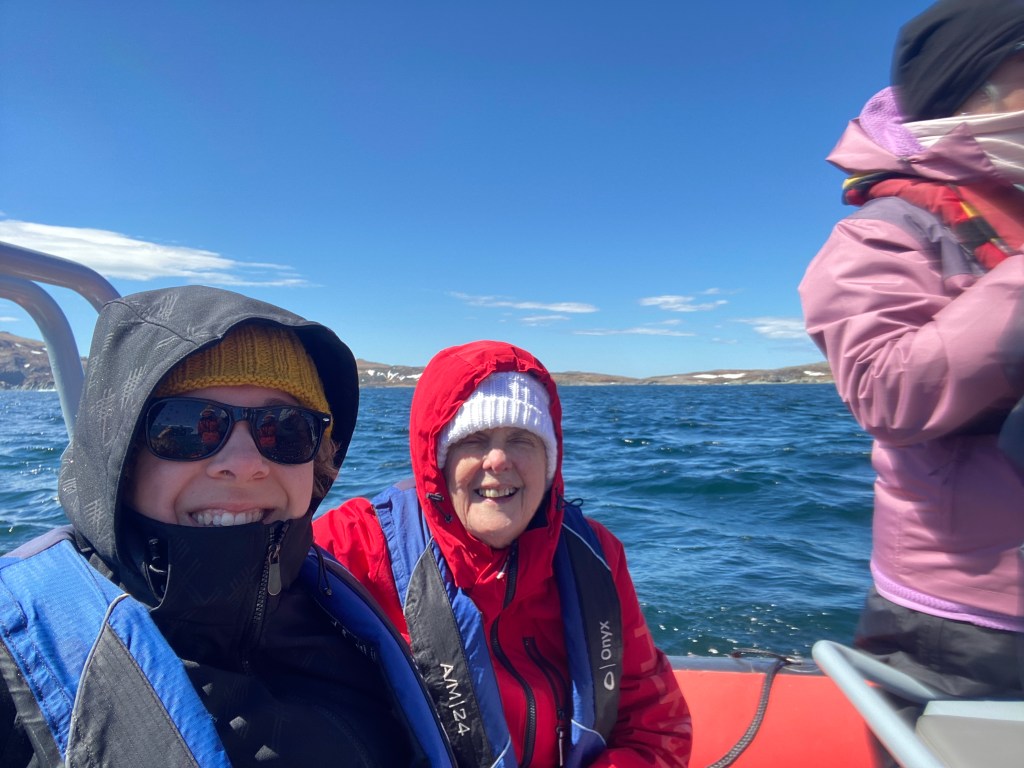
    Capping off the trip up north, and one of the big reasons we wandered up north, was the iceberg festival. These 10,000 year old beauties break off from Greenland each spring and make their way down iceberg alley for all of us to admire. The one above is about 100ft tall and aproximately 300 ft is below the waterline. We saw about a dozen of them throughout of 3 days in the area, but these ones we hopped on a zodiac to see up close, and up close they are even more majestic with rivers of water running down their cracks and the light green tint on the water showing some of the extents of the berg lurking below.

    We have to head back eastward to get to our next destination, as the locals say ‘see you by and by’.

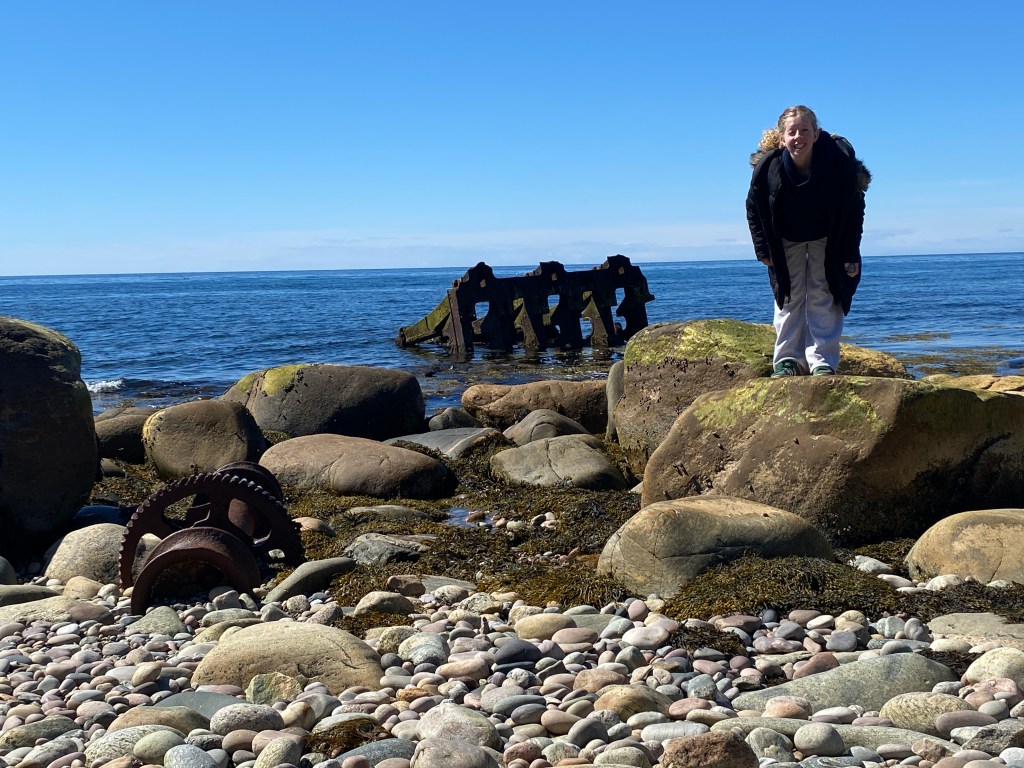
  • The Viking trail north to St. Anthony was a beautiful drive along the sea with several interesting stops. The first one we did was to visit the SS. Ethie shipwreck which happened in 1919. The SS. Ethie was caught in a blizzard, (which by my second week in Newfoundland’s spring season here, I can totally believe) and the engine wasn’t strong enough to pull away further into the sea. As the captain knew the boat was eventually going to crash to shore, they chose the shoal where they would have the greatest chance of saving all the passengers aboard. Luckily they managed to save everyone, even a baby they placed into an old mail bag, a bit like a Moses in the bulrushes situation.

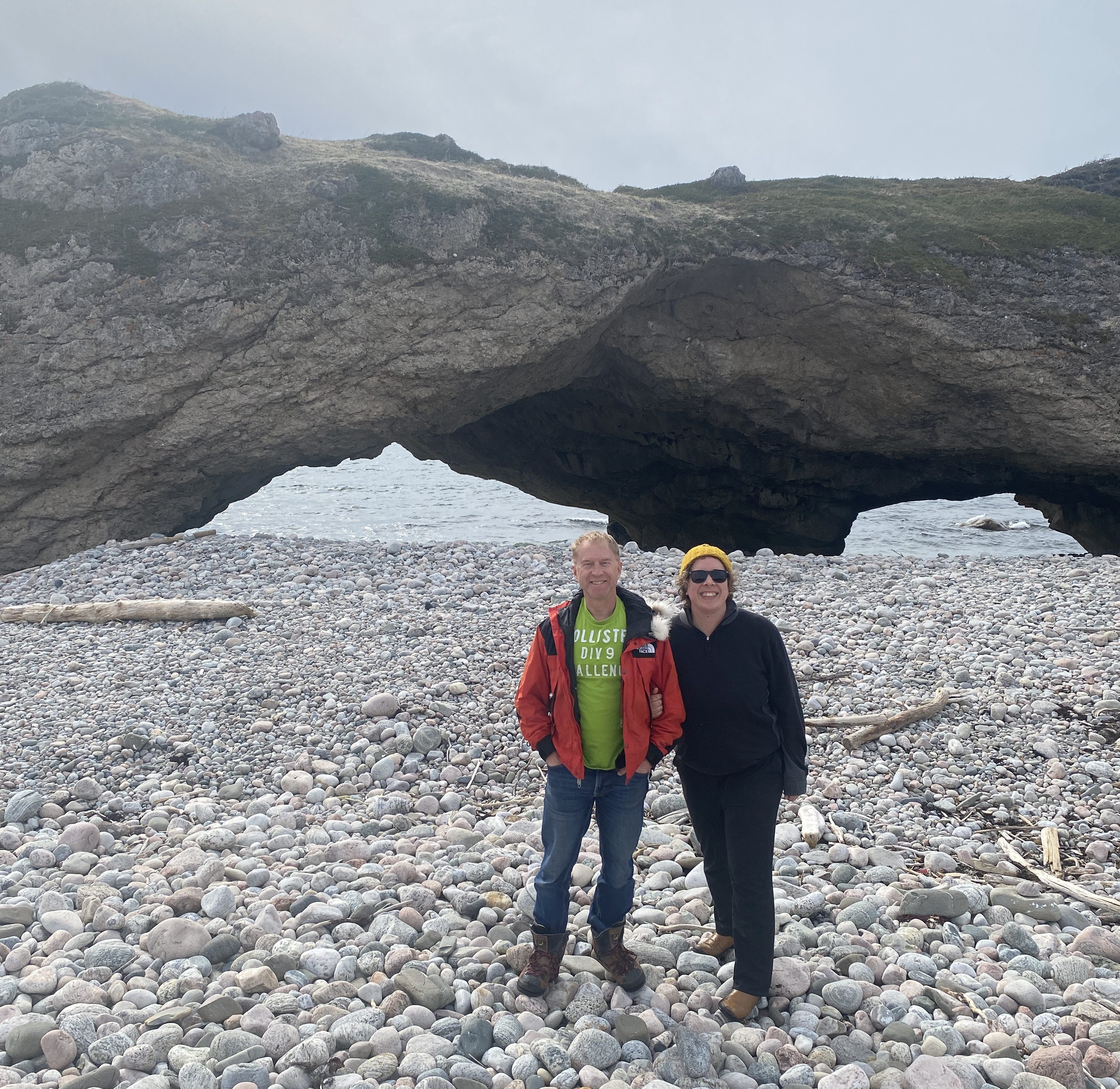
    A bit further down the road, Arches Provincial park is a beach where the sea rock formations form an arch and provide a pretty photo and picnic stop.

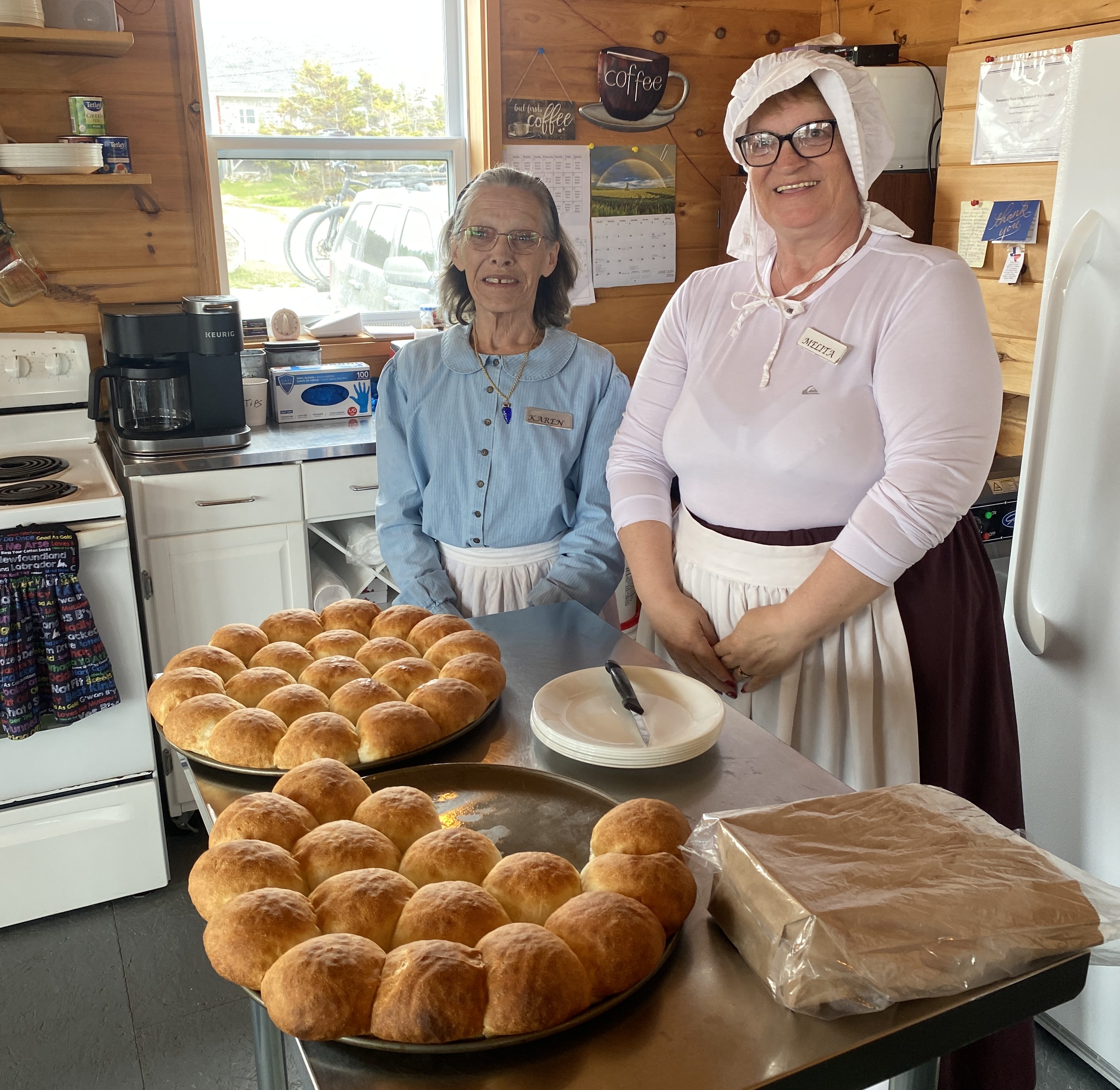
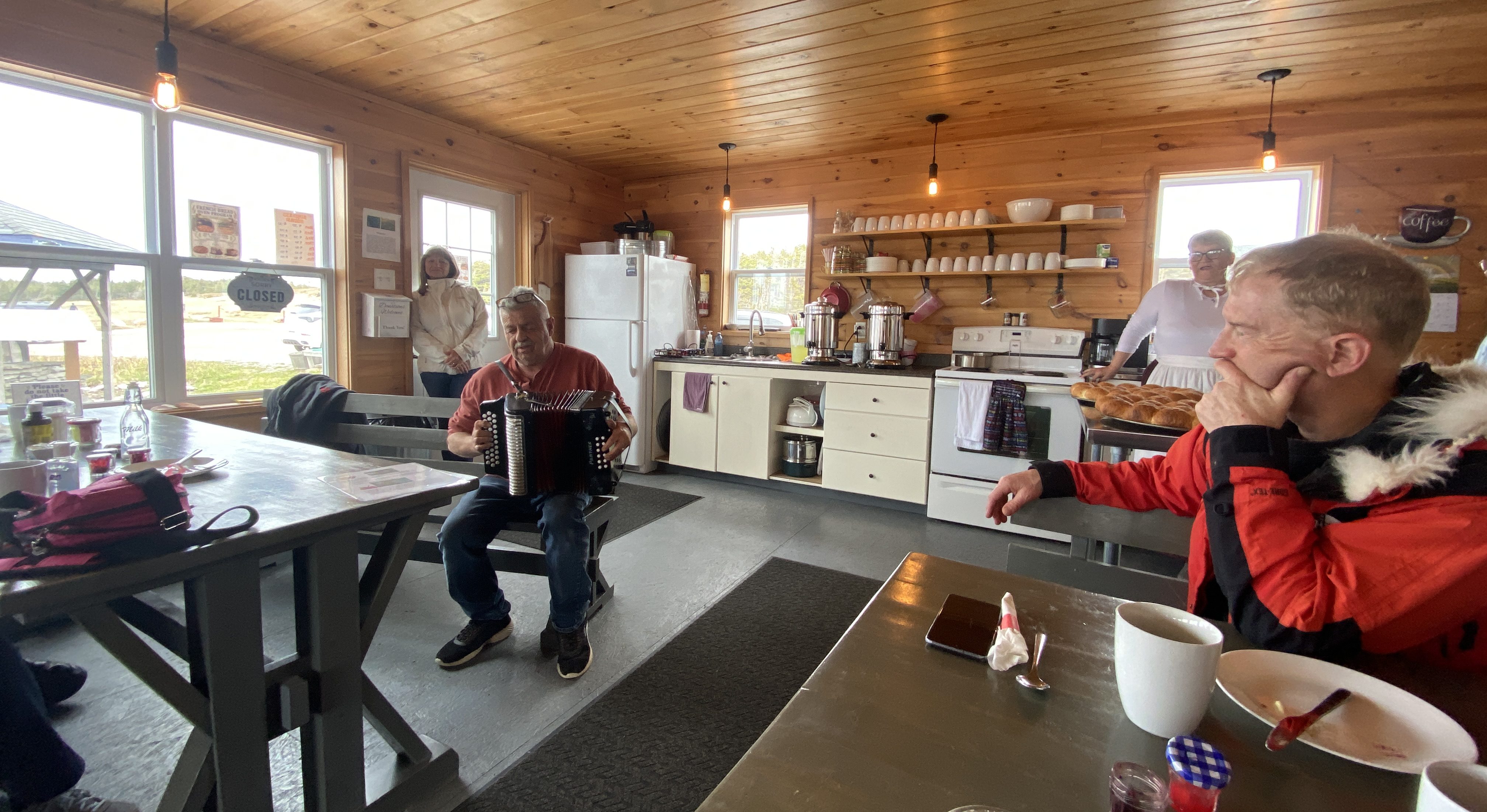
    Our last stop was Port au Choix, and as the weather was truly abominable, with shearing wind and rain, we decided to do an interpretive experience with a traditional French Bread Oven, rather than hike trails and learn about the First people of this area. The bread oven did not disappoint, as we arrived just in time for the daily 2pm baking. Over fresh hot tea, buns, and homemade jams were told about the first French settlers here, and how these ovens were constructed from the ballast bricks that ships carried over from Europe. These ships left with their hulls full of cod. Moving to and away from things seems to be a Newfoundland experience. When the cod fishing was stopped here in 1992, over 30,000 people were laid off, which was the largest industrial layoff in Canadian history. Thousands of ex-fishers came to my province, Alberta, searching (and finding) work in higher paying oilfield jobs. They were away months at a time to send back money to their families in Newfoundland. That was the story of our interpreter; he was dyslexic and struggled in school, but that didn’t matter because he was going to be a fishing cod his whole life…until he wasn’t. He had a wife and children to support, couldn’t read due to the dyslexia, and no way to support his family, but to move to Alberta. We listened to tales of people in the distant and not so distant past struggling, finding strength together, and eventually coming through hard times all with a song in their hearts, it was beautiful.
    We are off to St. Anthony next, Vikings here we come!

  • Grose Morne National Park is simply astounding and the 3 nights we spent here were some of the best times of week 1. For starters, the days here featured good weather (+13C) for us to frolic around the park in, which if you are spending all of your days outside, seems like a necessity. Secondly, the people of the park are really incredible, salt of the earth, beautiful, and helpful. Lastly, the trip featured scenery that you are unlikely to see anywhere else on earth, so let’s get to it!

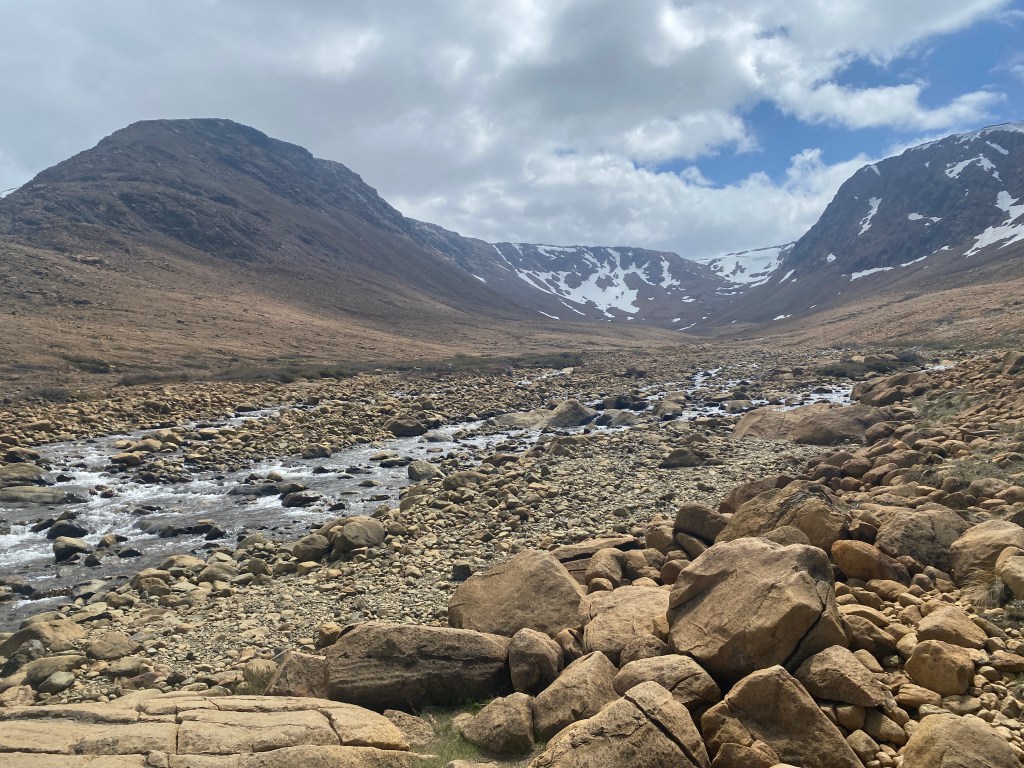
    We arrived and settled just in time for the sun to set over the ocean cove, and after cracking a beer we got planning our first day in the park. Mike and I decided to check out the Tablelands, which is one of the only places on earth that you can see the earth’s mantle exposed at the surface. Not surprisingly, the mantle makes the land look like a martian landscape with red iron filled rocks, periodite, and very little, if any, vegetation. The small hike was was like a post-apocalyptic landscape, a perfect setting to any new Dune or Mad Max movies that may be coming out.

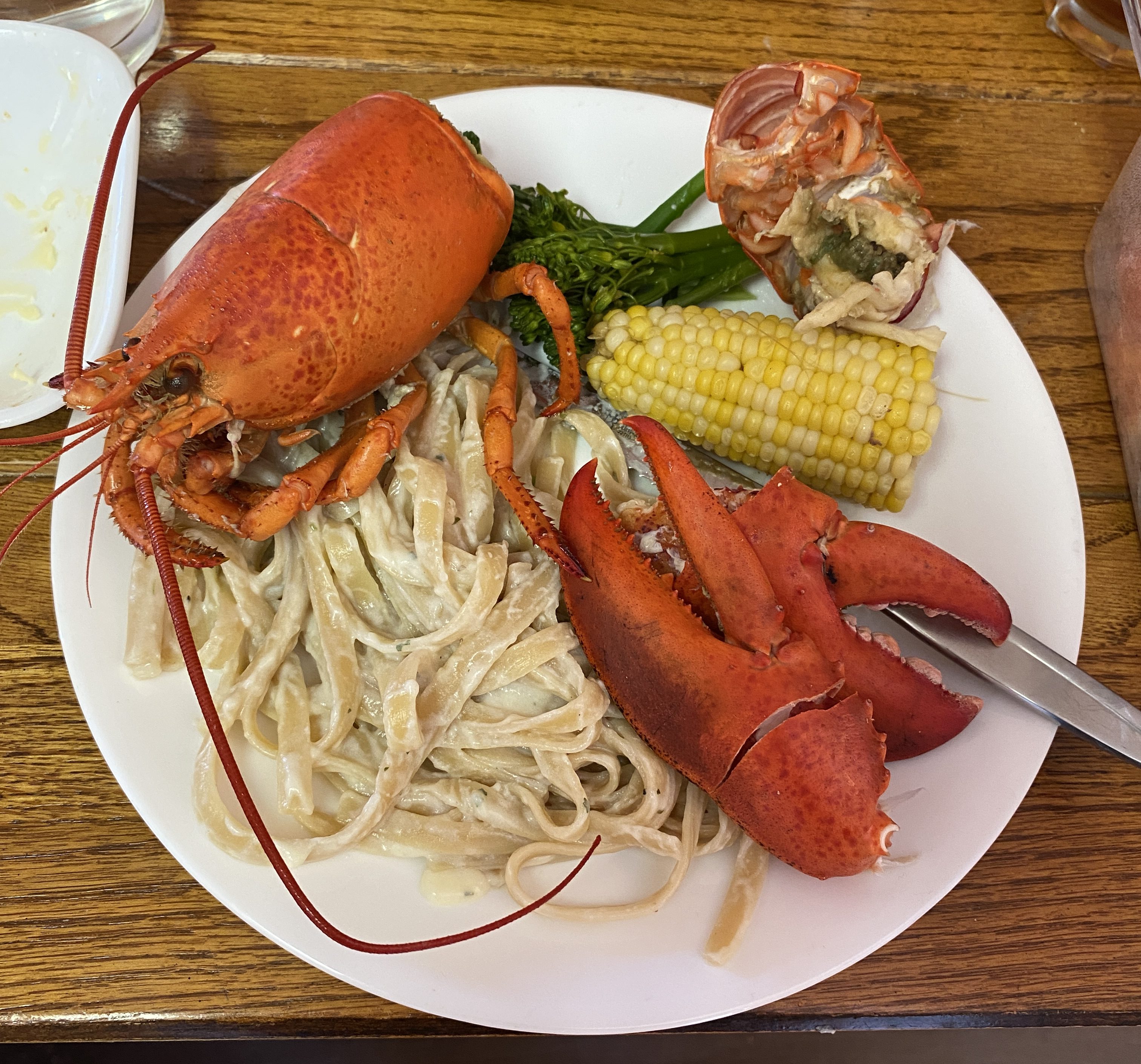
    After driving through our fair share of fishing villages and quaint towns it was time to dive into one of the best known attractions of the East Coast… Lobster season! Lobster season is short but sweet starting in late April and ending in early July, with the catch estimated to be worth $147 million each season. Our accommodation was fantastic, serving us up freshly caught lobster that was cooked, cracked, and hand-delivered to our cottage for the bottom dollar price of $7/lobster. Norm and Sue, really helped this trip come alive, and it was really hard to stop eating the lobster long enough to take this quick shot. Consider staying with them if you are in the park. The sketchy looking fettuccini was my contribution to the meal.

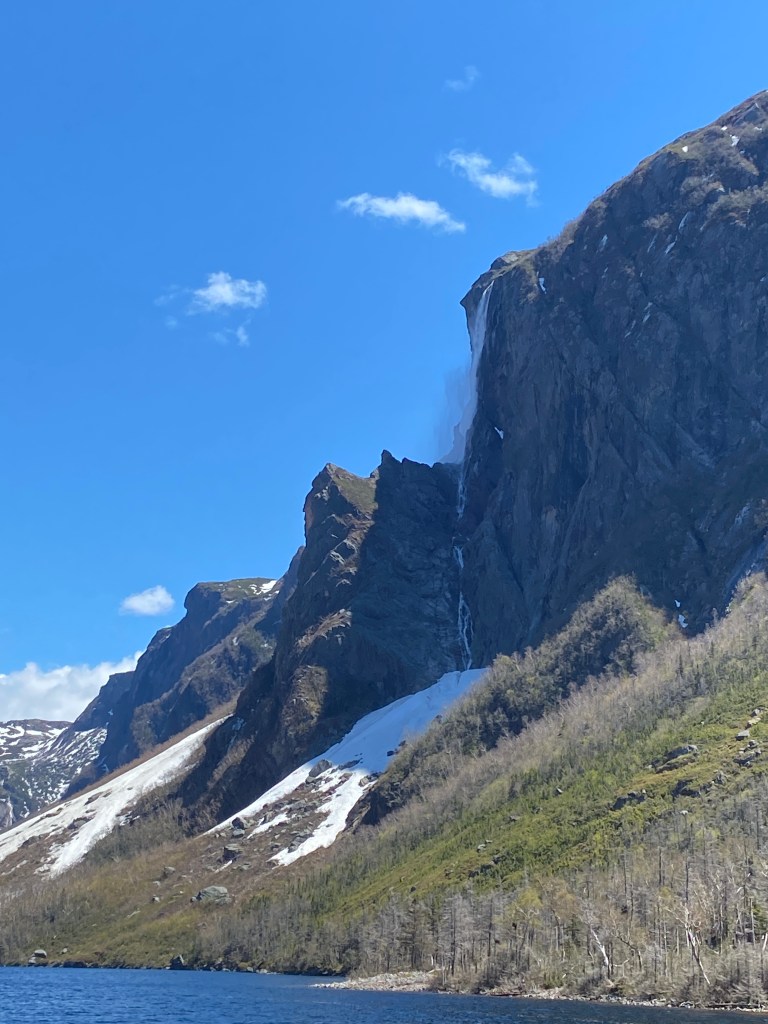
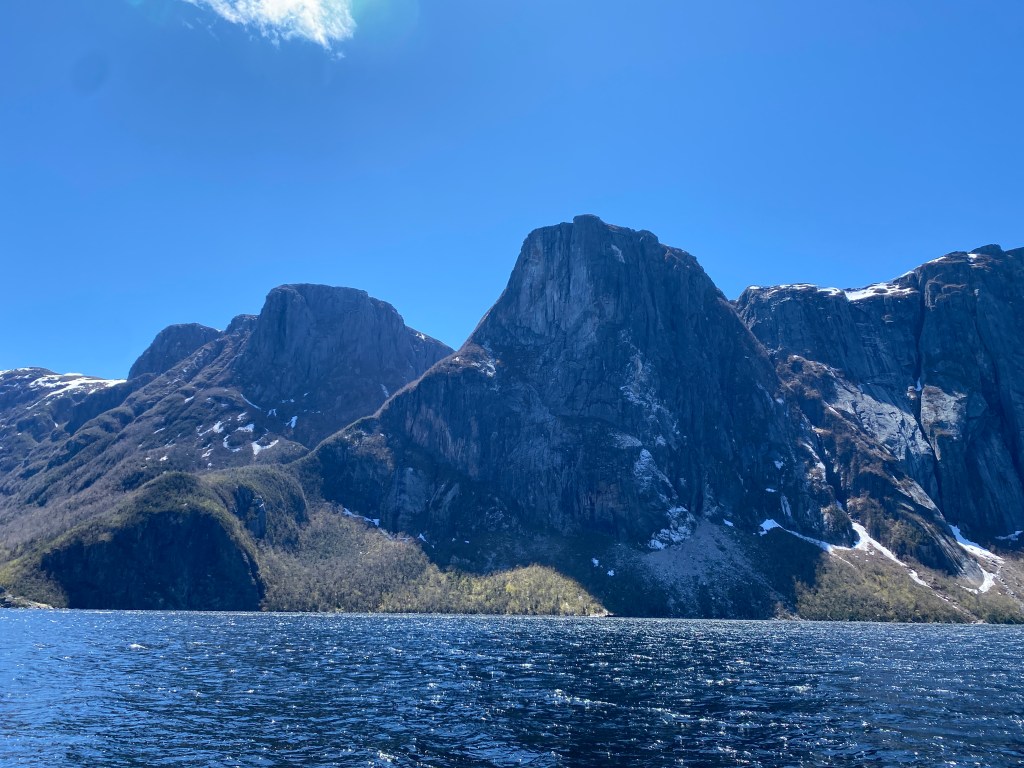
    Our last stop in the park was to hit up The Western Brook Pond Tour. Fun fact, in Newfoundland ‘Lakes’ are called Ponds, ‘Ponds’ are called Fashets, and ‘the Ocean’ is called the Sea. The Western Brook Pond happens to be a lake that was once apart of the ocean many thousands of years ago. The most visually appealing part of this pond is that the lake features the most beautiful fresh water fjords this side of the country.

    We are headed north on the viking trail to see what adventure awaits us.

  • Starting off our 2 week trip to Newfoundland, I have found that life here is just a bit different. Our trip is in the height of ‘Sprinter’ this year with the average temperature in St. John’s being a balmy +3C for the first weekend of June. The strength of the wind at the most eastern part of the continent was enough to knock you over and the drizzle from the wind and the rain really made you consider what things are like here the other 10 months of the year when the sun isn’t shining, and the whales aren’t frolicking in the waters off the coast from late June to mid August.

    It is a sober grey here, which explains a lot about the houses we’ve see. Houses are made of wood and painted in bright beautiful colours. This tradition was started because the fishermen wanted to be able to see their house against the onslaught of fog, and now that the fishing off the coast of Newfoundland has been heavily restricted, it is just a town tradition. Along the shore we would see houses that had vinyl siding be stripped away and broken from the pure force of the wind.

    St. John’s however, is a pretty good place to be in the rain, the pubs on George Street are enough to lighten anyone’s spirits and there are a number of museums if we need refuge from stormy days. We spent our time getting ‘Screeched – In’, with the Newfoundland Steak (Bologna), rum (Screetch), and kissing the cod to become honorary Newfoundlanders, hung out in some pubs, attempted to see Signal Hill but the fog really limited our views, so we ended up hanging out in at the Johnson Geological Museum.

    Everyone always say that Canadians are nice, but Newfoundlanders are probably amongst the nicest of our breed. They are known for hard work, a strong sense of hospitality, and never being one to turn down a good gathering.

    We are headed West to Grose Morne National park and are looking forward to exploring more of the unique blend of what makes Newfoundland tick.